


- Afhalen na 1 uur in een winkel met voorraad
- Gratis thuislevering in België vanaf € 30
- Ruim aanbod met 7 miljoen producten
- Afhalen na 1 uur in een winkel met voorraad
- Gratis thuislevering in België vanaf € 30
- Ruim aanbod met 7 miljoen producten





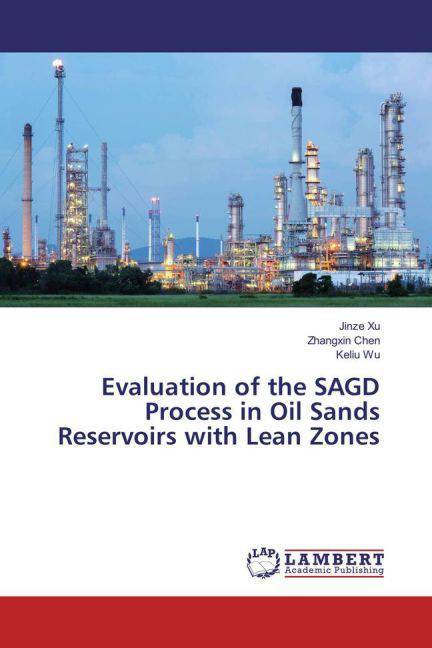
Evaluation of the SAGD Process in Oil Sands Reservoirs with Lean Zones
Jinze Xu, Zhangxin Chen, Keliu Wu
Paperback | Engels
€ 32,45
+ 64 punten
Omschrijving
In Canada, several steam-assisted gravity drainage (SAGD) projects reported existence of intersected lean zones that behave as thief zones. Thoroughly understanding the effect of lean zones and improving SAGD operations with such heterogeneity are critically important in reducing the disadvantages of lean zones during SAGD production. The mechanisms of how mobile water affects the SAGD production are thoroughly studied by developing analytical transient solutions. Meanwhile, the effects of the location, thickness, size, and interval distance of lean zones on SAGD are numerically discussed. The relationship between steam chamber volumes and steam-oil ratios is also highlighted. A ten-year history match is performed based on a geological model in an oil sands field with lean zones. A hybrid cyclic steam stimulation (CSS)/SAGD method is furthermore proposed and studied to overcome the practical problem of low injection pressure due to lean zones.
Specificaties
Betrokkenen
- Auteur(s):
- Uitgeverij:
Inhoud
- Aantal bladzijden:
- 124
- Taal:
- Engels
Eigenschappen
- Productcode (EAN):
- 9783330070936
- Uitvoering:
- Paperback
- Afmetingen:
- 150 mm x 220 mm


Alleen bij Standaard Boekhandel
+ 64 punten op je klantenkaart van Standaard Boekhandel
AANGERADEN


Beoordelingen
We publiceren alleen reviews die voldoen aan de voorwaarden voor reviews. Bekijk onze voorwaarden voor reviews.