


- Afhalen na 1 uur in een winkel met voorraad
- Gratis thuislevering in België vanaf € 30
- Ruim aanbod met 7 miljoen producten
- Afhalen na 1 uur in een winkel met voorraad
- Gratis thuislevering in België vanaf € 30
- Ruim aanbod met 7 miljoen producten





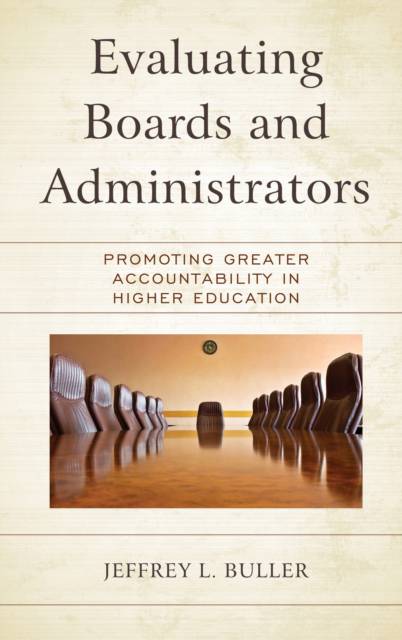
Evaluating Boards and Administrators
Promoting Greater Accountability in Higher Education
Jeffrey L Buller
Paperback | Engels
€ 55,95
+ 111 punten
Uitvoering
Omschrijving
Accrediting agencies and legislatures have become increasingly insistent that governing boards and upper administrators undergo regular evaluation at colleges and universities. Institutions of higher education have a long history of evaluating faculty members and are familiar with best practices for doing so. Offices of human resources include employees with experience in how staff members should be evaluated because these processes are well developed in the corporate world. But how does a college or university effectively evaluate its governing board, and who performs that process? How are administrators, particularly the chief executive officer and vice presidents, evaluated fairly and effectively? Since a majority of institutions are now required to perform these evaluations, they're seeking advice and examples of best practices, but there aren't resources available to provide these insights. This book will address that critical need. The target audience is college faculty and administrators, particularly those who need to develop or improve a system for evaluating governing boards or administrators because of accreditation requirements or legislative mandate.
Specificaties
Betrokkenen
- Auteur(s):
- Uitgeverij:
Inhoud
- Aantal bladzijden:
- 190
- Taal:
- Engels
Eigenschappen
- Productcode (EAN):
- 9781475854770
- Verschijningsdatum:
- 1/11/2020
- Uitvoering:
- Paperback
- Formaat:
- Trade paperback (VS)
- Afmetingen:
- 152 mm x 229 mm
- Gewicht:
- 285 g


Alleen bij Standaard Boekhandel
+ 111 punten op je klantenkaart van Standaard Boekhandel
Cadeau

AANGERADEN


Beoordelingen
We publiceren alleen reviews die voldoen aan de voorwaarden voor reviews. Bekijk onze voorwaarden voor reviews.