


- Afhalen na 1 uur in een winkel met voorraad
- Gratis thuislevering in België vanaf € 30
- Ruim aanbod met 7 miljoen producten
- Afhalen na 1 uur in een winkel met voorraad
- Gratis thuislevering in België vanaf € 30
- Ruim aanbod met 7 miljoen producten





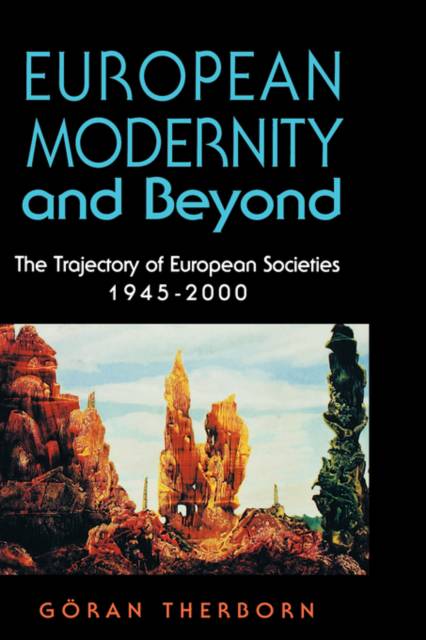
European Modernity and Beyond
The Trajectory of European Societies, 1945-2000
Göran Therborn
Hardcover | Engels
€ 448,95
+ 897 punten
Uitvoering
Omschrijving
The European community has evinced dramatic changes since the conclusion of the second World War; both individually and collectively, its nations have experienced continuous shifts in political, cultural, and economic climes. Has this process resulted in greater solidarity among European nations--and with others on the globe--or has it only strengthened disparities? To what extent has the period 1945-2000 produced fundamental differences or revealed areas of continuity? Through his broad-ranging analysis of the profile of contemporary European societies, Göran Therborn assays the development and outcome of such crucial issues as mass consumption, collective memory and identities, modes of collective action, and the two great steering projects of the times: socialism in the East and European union in the West. Combining theoretical depth with empirical data, this volume will be essential reading for all students of the politics and sociology of Europe and of contemporary industrial societies.
Specificaties
Betrokkenen
- Auteur(s):
- Uitgeverij:
Inhoud
- Aantal bladzijden:
- 416
- Taal:
- Engels
Eigenschappen
- Productcode (EAN):
- 9780803989344
- Verschijningsdatum:
- 8/06/1995
- Uitvoering:
- Hardcover
- Formaat:
- Genaaid
- Afmetingen:
- 156 mm x 234 mm
- Gewicht:
- 757 g



Alleen bij Standaard Boekhandel
+ 897 punten op je klantenkaart van Standaard Boekhandel
Cadeau

AANGERADEN


Beoordelingen
We publiceren alleen reviews die voldoen aan de voorwaarden voor reviews. Bekijk onze voorwaarden voor reviews.