



Je cadeautjes zeker op tijd in huis hebben voor de feestdagen? Kom langs in onze winkels en vind het perfecte geschenk!
- Afhalen na 1 uur in een winkel met voorraad
- Gratis thuislevering in België vanaf € 30
- Ruim aanbod met 7 miljoen producten
Je cadeautjes zeker op tijd in huis hebben voor de feestdagen? Kom langs in onze winkels en vind het perfecte geschenk!
- Afhalen na 1 uur in een winkel met voorraad
- Gratis thuislevering in België vanaf € 30
- Ruim aanbod met 7 miljoen producten





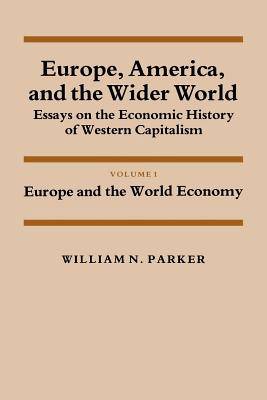
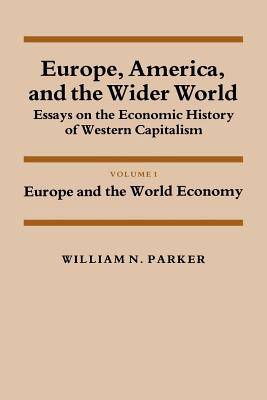
Europe, America, and the Wider World
Volume 1, Europe and the World Economy: Essays on the Economic History of Western Capitalism
William Nelson Parker
€ 64,95
+ 129 punten
Omschrijving
Taken together, the essays in this volume offer a particular, yet comprehensive, view of the economic history of Western Europe since the Renaissance. The focus is wide and the level of treatment deep. Between 1550 and 1940, Professor Parker contends, the development of European capitalism was, in a sense, all of a piece. He separates the development into three periods and processes - 'Malthusian', 'Smithian', and 'Schumpeterian'. Each period was governed by a characteristic dynamic that produced productivity growth, in the presence of other favourable elements, and influenced also the evolution of the forms of industrial and economic life. A certain internal logic is claimed for this progression, which in the nineteenth century extended this system and technology efficiently over much of the globe. In the concluding essay, Professor Parker examines the break-up of the capitalist synthesis and speculates on its transmutation into other forms. Essays and reviews previously available in widely scattered sources are brought together here for the first time and arranged and amplified to develop the central theses.
Specificaties
Betrokkenen
- Auteur(s):
- Uitgeverij:
Inhoud
- Aantal bladzijden:
- 288
- Taal:
- Engels
- Reeks:
Eigenschappen
- Productcode (EAN):
- 9780521274807
- Verschijningsdatum:
- 28/09/1984
- Uitvoering:
- Paperback
- Formaat:
- Trade paperback (VS)
- Afmetingen:
- 152 mm x 229 mm
- Gewicht:
- 426 g


Alleen bij Standaard Boekhandel
+ 129 punten op je klantenkaart van Standaard Boekhandel
CADEAU


Beoordelingen
We publiceren alleen reviews die voldoen aan de voorwaarden voor reviews. Bekijk onze voorwaarden voor reviews.