


- Afhalen na 1 uur in een winkel met voorraad
- Gratis thuislevering in België vanaf € 30
- Ruim aanbod met 7 miljoen producten
- Afhalen na 1 uur in een winkel met voorraad
- Gratis thuislevering in België vanaf € 30
- Ruim aanbod met 7 miljoen producten





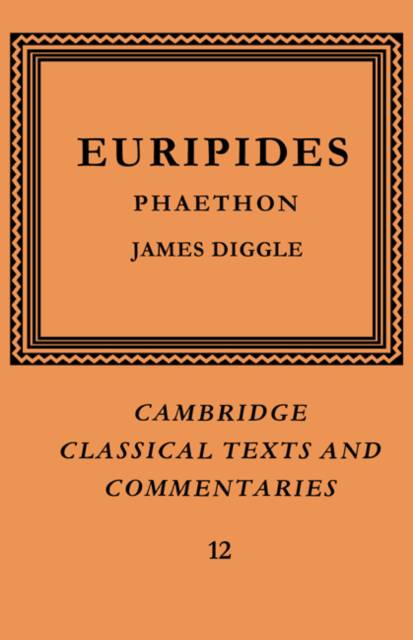
Euripides: Phaethon
Euripides
€ 109,95
+ 219 punten
Omschrijving
The surviving text of the fragmentary Phaethon of Euripides depends chiefly on two sources: two pages from a Euripidean manuscript, written about A.D. 500, and a papyrus of the third century B.C., which contains a substantial part of the parodos. These sources are supplemented by a number of citations in classical authors and by a recently published fragmentary hypothesis. Professor Diggle has examined all the manuscript evidence and offers many decipherments. He gives a text of the play and of the hypothesis, an exegetical commentary, prolegomena and appendices, in which he discusses the treatment of the Phaethon myth in classical literature and attempts a reconstruction of the plot of the play.
Specificaties
Betrokkenen
- Auteur(s):
- Uitgeverij:
Inhoud
- Aantal bladzijden:
- 268
- Taal:
- Engels
- Reeks:
- Reeksnummer:
- nr. 12
Eigenschappen
- Productcode (EAN):
- 9780521604246
- Verschijningsdatum:
- 20/05/2004
- Uitvoering:
- Paperback
- Formaat:
- Trade paperback (VS)
- Afmetingen:
- 140 mm x 216 mm
- Gewicht:
- 344 g


Alleen bij Standaard Boekhandel
+ 219 punten op je klantenkaart van Standaard Boekhandel
Cadeau

AANGERADEN


Beoordelingen
We publiceren alleen reviews die voldoen aan de voorwaarden voor reviews. Bekijk onze voorwaarden voor reviews.