


- Afhalen na 1 uur in een winkel met voorraad
- Gratis thuislevering in België vanaf € 30
- Ruim aanbod met 7 miljoen producten
- Afhalen na 1 uur in een winkel met voorraad
- Gratis thuislevering in België vanaf € 30
- Ruim aanbod met 7 miljoen producten




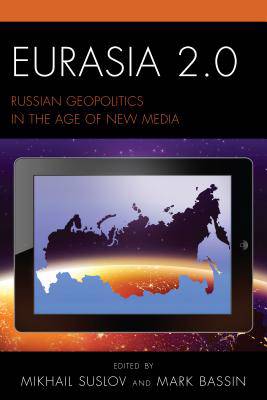
Eurasia 2.0
Russian Geopolitics in the Age of New Media
€ 254,45
Omschrijving
This book discusses the return of geopolitical ideas and doctrines to the post-Soviet space with special focus on the new phenomenon of digital geopolitics, which is an overarching term for different political practices including dissemination of geopolitical ideas online, using the internet by political figures and diplomats for legitimation and outreach activity, and viral spread of geopolitical memes. Different chapters explore the new possibilities and threats associated with this digitalization of geopolitical knowledge and practice. Our authors consider new spatial sensibilities and new identities of global as well as local Selves, the emergence of which is facilitated by the internet. They explore recent reconfigurations of the traditional imperial conundrum of center versus periphery. Developing Manuel Castells' argument that social activism in the digital era is organized around cultural values, the essays discuss new geopolitical ideologies which aim to reinforce Russia's spiritual sovereignty as a unique civilization, while at the same time seeking to rebrand Russia as a greater soft power by utilizing the Russian-speaking diaspora or employing traditionalist rhetoric. Great Power imagery, enemy-making, and visual mappings of Russia's future territorial expansion are traditional means for the manipulation of imperial pleasures and geopolitical fears. In the age of new media, however, this is being done with greater subtlety by mobilizing the grassroots, contracting private information channels, and de-politicizing geopolitics. Given the political events of recent years, it is logical that the Ukrainian crisis should provide the thematic backdrop for most of the authors.
Specificaties
Betrokkenen
- Uitgeverij:
Inhoud
- Aantal bladzijden:
- 374
- Taal:
- Engels
- Reeks:
Eigenschappen
- Productcode (EAN):
- 9781498521413
- Verschijningsdatum:
- 17/03/2016
- Uitvoering:
- Hardcover
- Formaat:
- Genaaid
- Afmetingen:
- 155 mm x 231 mm
- Gewicht:
- 748 g

Alleen bij Standaard Boekhandel
Cadeau

AANGERADEN


Beoordelingen
We publiceren alleen reviews die voldoen aan de voorwaarden voor reviews. Bekijk onze voorwaarden voor reviews.