



Bedankt voor het vertrouwen het afgelopen jaar! Om jou te bedanken bieden we GRATIS verzending (in België) aan op alles gedurende de hele maand januari.
- Afhalen na 1 uur in een winkel met voorraad
- In januari gratis thuislevering in België
- Ruim aanbod met 7 miljoen producten
Bedankt voor het vertrouwen het afgelopen jaar! Om jou te bedanken bieden we GRATIS verzending (in België) aan op alles gedurende de hele maand januari.
- Afhalen na 1 uur in een winkel met voorraad
- In januari gratis thuislevering in België
- Ruim aanbod met 7 miljoen producten





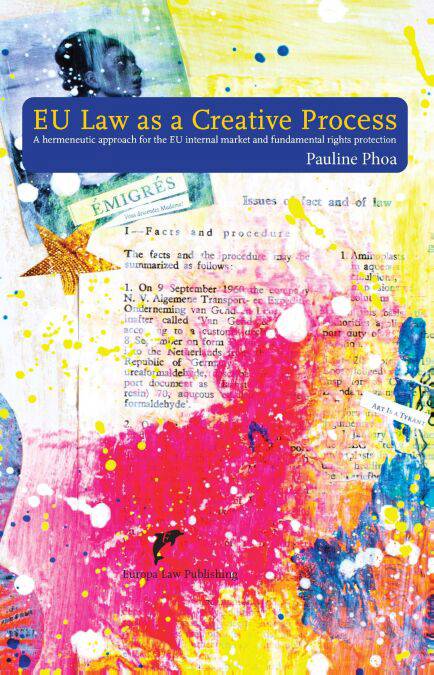
EU Law as a Creative Process E-BOOK
A hermeneutic approach for the EU internal market and fundamental rights protection
Pauline Phoa
E-book | Engels
€ 64,50
+ 64 punten
Uitvoering
Omschrijving
All legal texts tell us stories in many ways. What stories, what narratives, can be found in the case law of the Court of Justice of the European Union? This book invites the reader to think of the world of EU law as a creative process. From such a perspective, the adjudicative praxis of the Court is an
intellectual, cultural, literary activity, in which the reader can imagine him- or herself participating.
The author develops a novel hermeneutic methodology to examine the textual performance of the Court, by combining the work of American 'Law and Literature' scholar James Boyd White with the work of French philosopher Paul Ricoeur.
This methodology allows for an analysis of the role played by the Court in its legal reasoning and the vision of humanity it demonstrates: narratives of 'self' and 'other'.
The synthesis of two case studies (on economically inactive EU citizens' access to social benefits, and on data protection and privacy) results in an open-ended and self-reflective examination of the narratives about human agency and human responsibility in the case law of the Court of Justice European Union.
intellectual, cultural, literary activity, in which the reader can imagine him- or herself participating.
The author develops a novel hermeneutic methodology to examine the textual performance of the Court, by combining the work of American 'Law and Literature' scholar James Boyd White with the work of French philosopher Paul Ricoeur.
This methodology allows for an analysis of the role played by the Court in its legal reasoning and the vision of humanity it demonstrates: narratives of 'self' and 'other'.
The synthesis of two case studies (on economically inactive EU citizens' access to social benefits, and on data protection and privacy) results in an open-ended and self-reflective examination of the narratives about human agency and human responsibility in the case law of the Court of Justice European Union.
Specificaties
Betrokkenen
- Auteur(s):
- Uitgeverij:
Inhoud
- Aantal bladzijden:
- 300
- Taal:
- Engels
Eigenschappen
- Productcode (EAN):
- 9789462512795
- Verschijningsdatum:
- 28/10/2021
- Uitvoering:
- E-book
- Beveiligd met:
- Adobe DRM
- Formaat:


Alleen bij Standaard Boekhandel
+ 64 punten op je klantenkaart van Standaard Boekhandel
SOLDEN


Beoordelingen
We publiceren alleen reviews die voldoen aan de voorwaarden voor reviews. Bekijk onze voorwaarden voor reviews.