


- Afhalen na 1 uur in een winkel met voorraad
- Gratis thuislevering in België vanaf € 30
- Ruim aanbod met 7 miljoen producten
- Afhalen na 1 uur in een winkel met voorraad
- Gratis thuislevering in België vanaf € 30
- Ruim aanbod met 7 miljoen producten





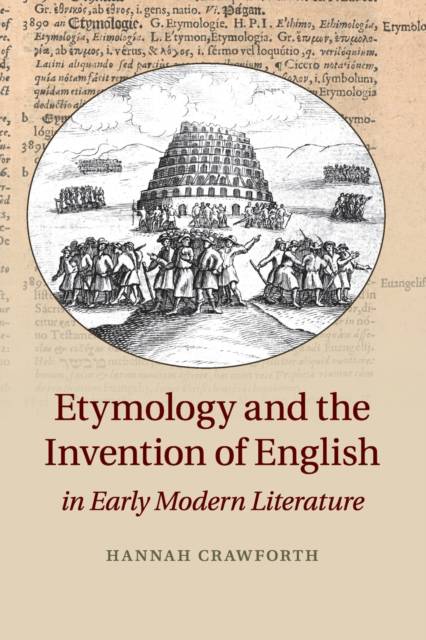
Etymology and the Invention of English in Early Modern Literature
Hannah Crawforth
Paperback | Engels
€ 67,95
+ 135 punten
Uitvoering
Omschrijving
How did authors such as Jonson, Spenser, Donne and Milton think about the past lives of the words they used? Hannah Crawforth shows how early modern writers were acutely attuned to the religious and political implications of the etymology of English words. She argues that these lexically astute writers actively engaged with the lexicographers, Anglo-Saxonists and etymologists who were carrying out a national project to recover, or invent, the origins of English, at a time when the question of a national vernacular was inseparable from that of national identity. English words are deployed to particular effect - as a polemical weapon, allegorical device, coded form of communication, type of historical allusion or political tool. Drawing together early modern literature and linguistics, Crawforth argues that the history of English as it was studied in the period radically underpins the writing of its greatest poets.
Specificaties
Betrokkenen
- Auteur(s):
- Uitgeverij:
Inhoud
- Aantal bladzijden:
- 232
- Taal:
- Engels
Eigenschappen
- Productcode (EAN):
- 9781107614550
- Verschijningsdatum:
- 1/12/2016
- Uitvoering:
- Paperback
- Formaat:
- Trade paperback (VS)
- Afmetingen:
- 152 mm x 229 mm
- Gewicht:
- 317 g


Alleen bij Standaard Boekhandel
+ 135 punten op je klantenkaart van Standaard Boekhandel
CADEAU

AANGERADEN


Beoordelingen
We publiceren alleen reviews die voldoen aan de voorwaarden voor reviews. Bekijk onze voorwaarden voor reviews.