


- Afhalen na 1 uur in een winkel met voorraad
- Gratis thuislevering in België vanaf € 30
- Ruim aanbod met 7 miljoen producten
- Afhalen na 1 uur in een winkel met voorraad
- Gratis thuislevering in België vanaf € 30
- Ruim aanbod met 7 miljoen producten





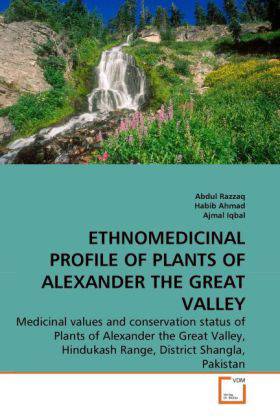
ETHNOMEDICINAL PROFILE OF PLANTS OF ALEXANDER THE GREAT VALLEY
Medicinal values and conservation status of Plants of Alexander the Great Valley, Hindukash Range, District Shangla, Pakistan
Abdul Razzaq, Habib Ahmad, Ajmal Iqbal
Paperback | Engels
€ 48,45
+ 96 punten
Omschrijving
The present study was carried out in 2006-7 to explore and document ethnomedicinal profile and conservation status of Plant biodiversity in "Alexander the Great Valley" Hindukash range, District Shangla, Pakistan. It is one of world's most interesting and historical areas, not only for its natural resources and medicinal plant diversity but also for old relics or ruins of Alexander the Great that is attracting national and global interest. Study revealed that there were 32 medicinal plants belonging to 26 families. Herbaceous layer (19 species) were found to be the most used life forms followed by trees (6 species), shrubs (4 species), Climbers (2 species) and Saprophytes (1) in descending order. For knowing the ethno medicinal and socio economic profile of the people, a simple questionnaire was developed and filled through interviews. The botanical name, followed by local name, family, part used and ethnomedicinal uses in different folk was recorded. Present investigation confined to document medicinal uses of plants utilized by local peoples.
Specificaties
Betrokkenen
- Auteur(s):
- Uitgeverij:
Inhoud
- Aantal bladzijden:
- 68
- Taal:
- Engels
Eigenschappen
- Productcode (EAN):
- 9783639285352
- Verschijningsdatum:
- 27/08/2010
- Uitvoering:
- Paperback
- Afmetingen:
- 152 mm x 229 mm
- Gewicht:
- 108 g


Alleen bij Standaard Boekhandel
+ 96 punten op je klantenkaart van Standaard Boekhandel
Cadeau

AANGERADEN


Beoordelingen
We publiceren alleen reviews die voldoen aan de voorwaarden voor reviews. Bekijk onze voorwaarden voor reviews.