


- Afhalen na 1 uur in een winkel met voorraad
- Gratis thuislevering in België vanaf € 30
- Ruim aanbod met 7 miljoen producten
- Afhalen na 1 uur in een winkel met voorraad
- Gratis thuislevering in België vanaf € 30
- Ruim aanbod met 7 miljoen producten





€ 192,45
+ 384 punten
Eenvoudig bestellen
Veilig betalen


Gratis thuislevering vanaf € 30 (via bpost)
Gratis levering in je Standaard Boekhandel
Omschrijving
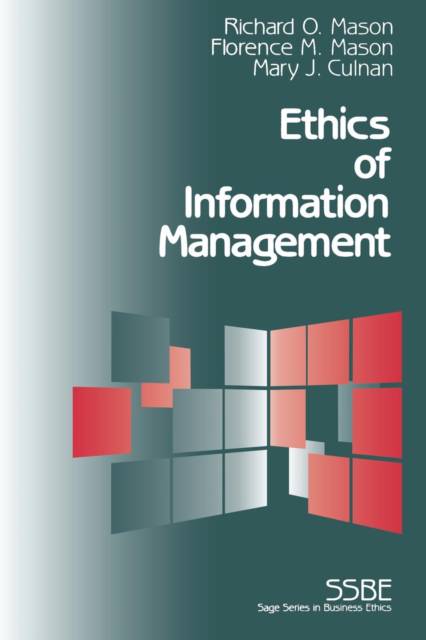
This is a well-written and well-organized treatment of a very important topic. I enjoyed reading it and gained some new insights and ideas. The explanations are clear and detailed and the examples are very helpful. The Ethics of Information Management is unique with its total focus on information and privacy. This is a critical area and this book makes a fine contribution. --Ernest A. Kallman, Research Fellow, Center for Business Ethics, Bentley College "At this stage in the information age, at this point in our understanding of issues and our understanding of the relation between ethics and information, any book that raises our awareness and sense of responsibility is worth publishing. Ethics of Information Management definitely does that." --Martha L. Hale, School of Library and Information Management, Emporia State University "This book breaks new ground in innovatively introducing the issues involved in information ethics to a business school curriculum. Cases are used throughout to identify the issues with numerous references back to each case to identify ways of reasoning, situations in which policies and procedures can help, and situations in which laws and professional codes are useful or not. There are many nuggets of information and ways of looking at situations that will assist readers in identifying the issues and stakeholders, assessing alternatives and their ramifications, and making informed, ethical decisions throughout their careers." --Sue Conger, Management Information Sciences, Southern Methodist University The authors to the second volume in the Sage Series in Business Ethics provide ways of thinking about information and the new responsibilities engendered by its acquisition, processing, storing, dissemination, and use. The Ethics of Information Management provides a set of concepts, methods, arguments, and illustrations designed to sharpen the reader′s ethical focus. Organized into three sections, the first part of the book provides motivation and conceptual background for the volume as a whole. Part II focuses on fundamental concepts about ethics, including a description of the process of ethical thinking and a range of theories and principles that can be used in ethical situations. In the final chapters, the concepts of information, and the need for ethics and ethical thinking, are applied to the various levels of the social system to which they pertain: individual and professional, organizational and societal, or systemic. Intended primarily for those who are, or will soon become, information professionals, The Ethics of Information will also be of interest to others concerned about what those who handle information do and how it affects them.
Specificaties
Betrokkenen
- Auteur(s):
- Uitgeverij:
Inhoud
- Aantal bladzijden:
- 352
- Taal:
- Engels
- Reeks:
- Reeksnummer:
- nr. 2
Eigenschappen
- Productcode (EAN):
- 9780803957565
- Verschijningsdatum:
- 3/08/1995
- Uitvoering:
- Paperback
- Formaat:
- Trade paperback (VS)
- Afmetingen:
- 152 mm x 226 mm
- Gewicht:
- 566 g


Alleen bij Standaard Boekhandel
+ 384 punten op je klantenkaart van Standaard Boekhandel
CADEAU

AANGERADEN


Beoordelingen
We publiceren alleen reviews die voldoen aan de voorwaarden voor reviews. Bekijk onze voorwaarden voor reviews.