


- Afhalen na 1 uur in een winkel met voorraad
- Gratis thuislevering in België vanaf € 30
- Ruim aanbod met 7 miljoen producten
- Afhalen na 1 uur in een winkel met voorraad
- Gratis thuislevering in België vanaf € 30
- Ruim aanbod met 7 miljoen producten





€ 25,95
+ 51 punten
Omschrijving
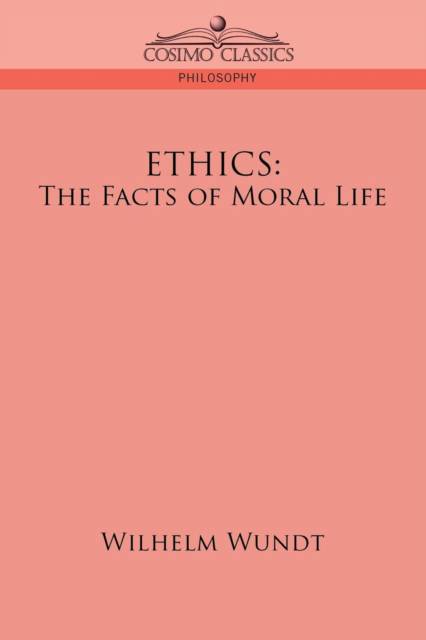
The sacrificial meal... has assumed the most varied forms, largely as a result of the secularisation of its ends. We have it, e.g., in the 'celebration' dinner held in joyful remembrance of important family occurrences, or of important public events. We have it, again, in a form peculiar to modern civilization, in the public banquet, where it serves as the material basis for the prosecution of municipal, political or professional interests. -from "The Individual Forms of Life: Food" One of the founding fathers of the modern-day disciplines of experimental and cognitive psychology, Wilhelm Wundt, in this extraordinary work, examines the concept of ethics as a cornerstone of metaphysics, as the basis for an understanding of the universe as a whole. Translated from the second German edition of 1892, here we see all aspects of human behavior and culture-from how we eat to how, and who, we worship-as an interconnected whole, including: . "good" and "bad" . the immoral elements of myth . the gods as moral ideals . the anthropomorphic nature-myth . moral laws as religious commands . the relation of custom to law and morality . polite manners and personal deportment . the family and the tribal union . the feeling of community in nation and state . the invention of tools . the idea of civilization . and much more. OF INTEREST TO: students of psychology, readers of comparative mythology AUTHOR BIO: German psychologist WILHELM MAXIMILIAN WUNDT (1832-1920) was professor of philosophy at the University of Leipzig. He wrote numerous articles and books in the field of psychology, including the foundational Principles of Physiological Psychology (1874).
Specificaties
Betrokkenen
- Auteur(s):
- Uitgeverij:
Inhoud
- Aantal bladzijden:
- 352
- Taal:
- Engels
Eigenschappen
- Productcode (EAN):
- 9781596055032
- Verschijningsdatum:
- 1/06/2006
- Uitvoering:
- Paperback
- Formaat:
- Trade paperback (VS)
- Afmetingen:
- 152 mm x 229 mm
- Gewicht:
- 517 g



Alleen bij Standaard Boekhandel
+ 51 punten op je klantenkaart van Standaard Boekhandel
Cadeau

AANGERADEN


Beoordelingen
We publiceren alleen reviews die voldoen aan de voorwaarden voor reviews. Bekijk onze voorwaarden voor reviews.