


- Afhalen na 1 uur in een winkel met voorraad
- Gratis thuislevering in België vanaf € 30
- Ruim aanbod met 7 miljoen producten
- Afhalen na 1 uur in een winkel met voorraad
- Gratis thuislevering in België vanaf € 30
- Ruim aanbod met 7 miljoen producten





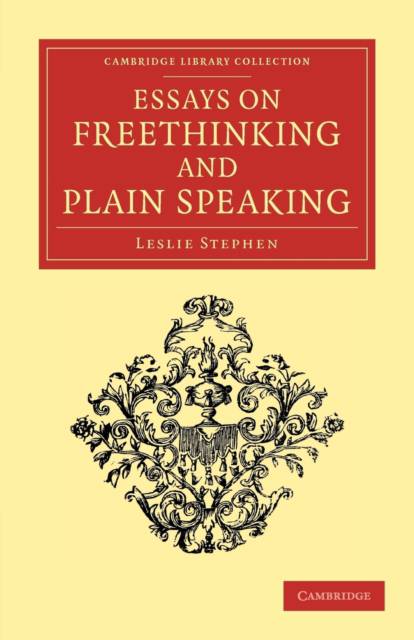
Essays on Freethinking and Plain Speaking
Leslie Stephen
€ 88,95
+ 177 punten
Eenvoudig bestellen
Veilig betalen


Gratis thuislevering vanaf € 30 (via bpost)
Gratis levering in je Standaard Boekhandel
Omschrijving
Sir Leslie Stephen (1832-1904), the founding Editor of the Dictionary of National Biography and writer on philosophy, ethics, and literature, was educated at Eton, King's College, London, and Trinity Hall, Cambridge, where he remained as a Fellow and tutor until 1864, becoming an ordained priest in 1859. Doubt concerning his religious convictions set in rapidly, although it was not until 1875 that he formally renounced his orders. First published in book form in 1873, these closely argued essays challenging the philosophy of religious doctrine were written originally for Fraser's Magazine and The Fortnightly Review. Despite its cautious reception, the work established his reputation as a leading writer on agnosticism, paving the way for his later work The Science of Ethics. His interest in eighteenth-century thinkers is reflected in this work, with chapters on Shaftesbury and Warburton, and contemporary debate is explored in the essay on Darwinism and Divinity.
Specificaties
Betrokkenen
- Auteur(s):
- Uitgeverij:
Inhoud
- Aantal bladzijden:
- 378
- Taal:
- Engels
- Reeks:
Eigenschappen
- Productcode (EAN):
- 9781108047630
- Verschijningsdatum:
- 12/07/2012
- Uitvoering:
- Paperback
- Formaat:
- Trade paperback (VS)
- Afmetingen:
- 140 mm x 216 mm
- Gewicht:
- 476 g


Alleen bij Standaard Boekhandel
+ 177 punten op je klantenkaart van Standaard Boekhandel
CADEAU

AANGERADEN


Beoordelingen
We publiceren alleen reviews die voldoen aan de voorwaarden voor reviews. Bekijk onze voorwaarden voor reviews.