


- Afhalen na 1 uur in een winkel met voorraad
- Gratis thuislevering in België vanaf € 30
- Ruim aanbod met 7 miljoen producten
- Afhalen na 1 uur in een winkel met voorraad
- Gratis thuislevering in België vanaf € 30
- Ruim aanbod met 7 miljoen producten





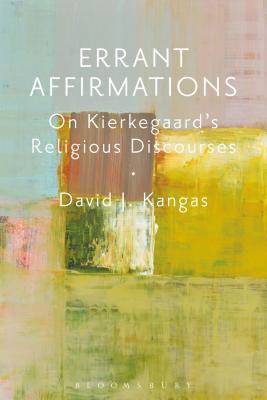
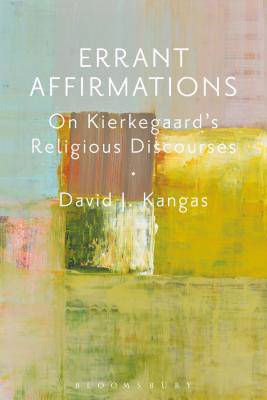
Errant Affirmations
On the Philosophical Meaning of Kierkegaard's Religious Discourses
David J Kangas
Hardcover | Engels
€ 296,95
+ 593 punten
Uitvoering
Omschrijving
Kierkegaard's religious discourses - his writings which have explicitly dealt with religion - have historically been given scant attention by philosophers. They have generally been considered to be of less philosophical interest than his 'proper' philosophy. Errant Affirmations radically questions this claim and considers Kierkegaard's religious writings as absolutely central to his philosophical vision.
Through close and clear readings of Kierkegaard's work, David Kangas argues that contemporary philosophical themes - gift, temporality, language, death, nothingness, economy and selfhood- are not only evident in the 'religious' works but explored with real depth and fascination. Above all, the book argues that Kierkegaard's positive account of the human condition, his "ontology," fully emerges only in these discourses. It shows how these discourses are organized around an "errant" kind of affirmation-namely, an affirmation of existence that is without conditions. Such affirmation involves the intensification of life around "today" and coincides with a joy that has no particular cause. It is an affirmation capable of affirming life even amidst its finitude and suffering. Errant Affirmations is a fresh interpretation of Kierkegaard's understudied works that not only opens up a new reading of Kierkegaard but elucidates his 'religious' texts and places them organically within his philosophy as a whole.Specificaties
Betrokkenen
- Auteur(s):
- Uitgeverij:
Inhoud
- Aantal bladzijden:
- 208
- Taal:
- Engels
Eigenschappen
- Productcode (EAN):
- 9781350020054
- Verschijningsdatum:
- 30/11/2017
- Uitvoering:
- Hardcover
- Formaat:
- Genaaid
- Afmetingen:
- 156 mm x 234 mm
- Gewicht:
- 471 g


Alleen bij Standaard Boekhandel
+ 593 punten op je klantenkaart van Standaard Boekhandel
AANGERADEN


Beoordelingen
We publiceren alleen reviews die voldoen aan de voorwaarden voor reviews. Bekijk onze voorwaarden voor reviews.