


- Afhalen na 1 uur in een winkel met voorraad
- Gratis thuislevering in België vanaf € 30
- Ruim aanbod met 7 miljoen producten
- Afhalen na 1 uur in een winkel met voorraad
- Gratis thuislevering in België vanaf € 30
- Ruim aanbod met 7 miljoen producten





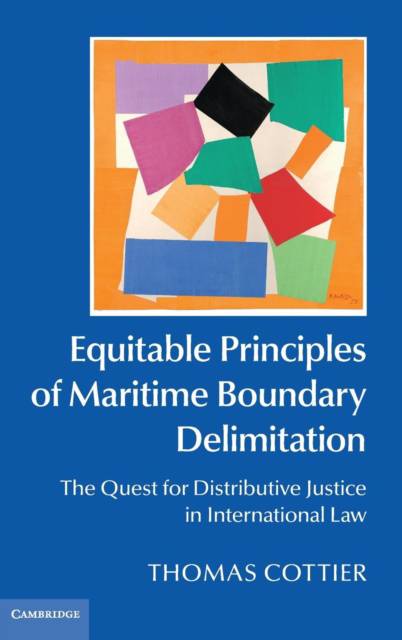
Equitable Principles of Maritime Boundary Delimitation
The Quest for Distributive Justice in International Law
Thomas Cottier
Hardcover | Engels
€ 298,45
+ 596 punten
Omschrijving
Equity emerged as a powerful symbol of aspired redistribution in international relations. Operationally, it has had limited impact in the Westphalian system of nation states - except for maritime boundary delimitations. This book deals with the role of equity in international law, and offers a detailed case study on maritime boundary delimitation in the context of the enclosure movement in the law of the sea. It assesses treaty law and the impact of the United Nations Convention on the Law of the Sea. It depicts the process of trial and error in the extensive case law of the International Court of Justice and arbitral tribunals and expounds the underlying principles and factors informing the methodology both in adjudication and negotiations. Unlike other books, the main focus is on equity and its implications for legal methodology, in particular offering further guidance in the field of international economic law.
Specificaties
Betrokkenen
- Auteur(s):
- Uitgeverij:
Inhoud
- Aantal bladzijden:
- 836
- Taal:
- Engels
Eigenschappen
- Productcode (EAN):
- 9781107080171
- Verschijningsdatum:
- 30/04/2015
- Uitvoering:
- Hardcover
- Formaat:
- Genaaid
- Afmetingen:
- 152 mm x 229 mm
- Gewicht:
- 1274 g



Alleen bij Standaard Boekhandel
+ 596 punten op je klantenkaart van Standaard Boekhandel
Cadeau

AANGERADEN


Beoordelingen
We publiceren alleen reviews die voldoen aan de voorwaarden voor reviews. Bekijk onze voorwaarden voor reviews.