


- Afhalen na 1 uur in een winkel met voorraad
- Gratis thuislevering in België vanaf € 30
- Ruim aanbod met 7 miljoen producten
- Afhalen na 1 uur in een winkel met voorraad
- Gratis thuislevering in België vanaf € 30
- Ruim aanbod met 7 miljoen producten





€ 36,45
+ 72 punten
Omschrijving
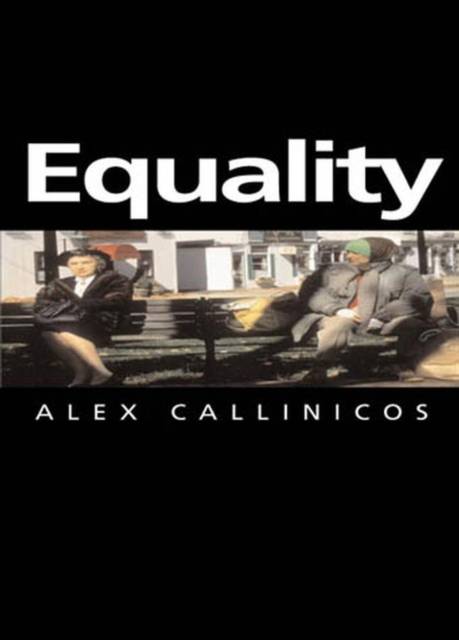
'The class war is over. But the struggle for true equality has only just begun, ' Tony Blair has declared. The world indeed enters the 21st century heaving with poverty and inequality. Just three super-rich men have a net worth equal to the income of the 36 poorest countries in the world. The gap between rich and poor is also growing in the advanced economies as well. 14 million people, a quarter of the population of the United Kingdom are currently classified as poor, compared to only four million in 1979.
In this important new book, Alex Callinicos explores the meaning of equality in the contemporary world. He traces its origins as a political ideal in the great democratic revolutions of the 17th and the 18th century, and in the efforts of the socialist movement to force capitalism to live up to its promise of liberty, equality and fraternity. Callinicos also shows how the theories of egalitarian justice developed over the past generation by philosophers such as John Rawls, Ronald Dworkin, Amartya Sen and G. A. Cohen have given a much more precise meaning to the ideal of equality. Individuals are entitled to be protected from the consequences of circumstances beyond their control - for example, the socio-economic position and the natural talents they inherit - in order to have equal freedom to pursue their own well-being.
The implications of egalitarian justice are radical. Callinicos critically reviews the versions of this ideal - equality of opportunity and social inclusion - by supporters of the Third Way such as Gordon Brown and Anthony Giddens. He argues that the strategy pursued by New Labour to increase equality is riddled with contradictions and contains an underlying authoritarian dimension. Fundamentally, equality and the market are irreconcilable. Any attempt seriously to increase social equality will come into conflict with the logic of the capitalist economic system. Only a socialist society, organized along democratic and decentralized lines, can realize the ideal of equality.
This book will be of great interest to students of politics, philosophy and sociology, and all those interested in this key and controversial topic.
In this important new book, Alex Callinicos explores the meaning of equality in the contemporary world. He traces its origins as a political ideal in the great democratic revolutions of the 17th and the 18th century, and in the efforts of the socialist movement to force capitalism to live up to its promise of liberty, equality and fraternity. Callinicos also shows how the theories of egalitarian justice developed over the past generation by philosophers such as John Rawls, Ronald Dworkin, Amartya Sen and G. A. Cohen have given a much more precise meaning to the ideal of equality. Individuals are entitled to be protected from the consequences of circumstances beyond their control - for example, the socio-economic position and the natural talents they inherit - in order to have equal freedom to pursue their own well-being.
The implications of egalitarian justice are radical. Callinicos critically reviews the versions of this ideal - equality of opportunity and social inclusion - by supporters of the Third Way such as Gordon Brown and Anthony Giddens. He argues that the strategy pursued by New Labour to increase equality is riddled with contradictions and contains an underlying authoritarian dimension. Fundamentally, equality and the market are irreconcilable. Any attempt seriously to increase social equality will come into conflict with the logic of the capitalist economic system. Only a socialist society, organized along democratic and decentralized lines, can realize the ideal of equality.
This book will be of great interest to students of politics, philosophy and sociology, and all those interested in this key and controversial topic.
Specificaties
Betrokkenen
- Auteur(s):
- Uitgeverij:
Inhoud
- Aantal bladzijden:
- 176
- Taal:
- Engels
- Reeks:
- Reeksnummer:
- nr. 7
Eigenschappen
- Productcode (EAN):
- 9780745623252
- Verschijningsdatum:
- 3/10/2000
- Uitvoering:
- Hardcover
- Formaat:
- Ongenaaid / garenloos gebonden
- Afmetingen:
- 161 mm x 233 mm
- Gewicht:
- 394 g


Alleen bij Standaard Boekhandel
+ 72 punten op je klantenkaart van Standaard Boekhandel
Cadeau

AANGERADEN


Beoordelingen
We publiceren alleen reviews die voldoen aan de voorwaarden voor reviews. Bekijk onze voorwaarden voor reviews.