


- Afhalen na 1 uur in een winkel met voorraad
- Gratis thuislevering in België vanaf € 30
- Ruim aanbod met 7 miljoen producten
- Afhalen na 1 uur in een winkel met voorraad
- Gratis thuislevering in België vanaf € 30
- Ruim aanbod met 7 miljoen producten





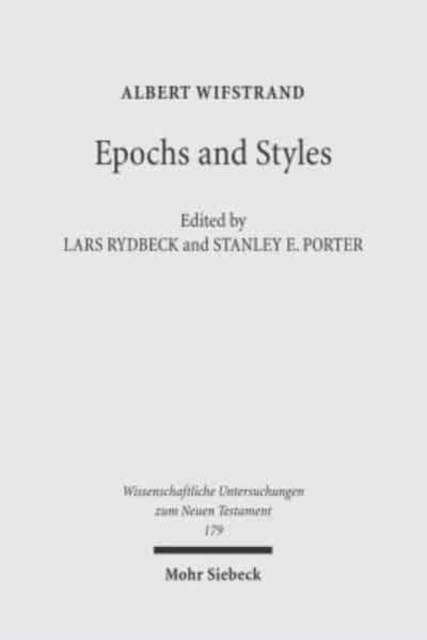
Epochs and Styles
Selected Writings on the New Testament, Greek Language and Greek Culture in the Post-Classical Era
€ 109,45
+ 218 punten
Omschrijving
This book contains essays by Albert Wifstrand, most of which have previously only been published in Swedish. The author brings his range of learning and insight to bear on fundamental questions regarding the Greek of the New Testament. By bringing a full range of stylistic, grammatical and socio-historical data into consideration, Wifstrand finds a place for the language of the New Testament within the evolution of post-classical Greek. This includes full appreciation of the so-called classicistic renaissance in language and culture in the early Empire and its influence on the development of later Greek. Wifstrand's firm grasp of the full history of the Greek language and culture from classical to Byzantine times allows him to offer original insights into the difference between Greek and modern prose style. In the course of his discussions, he also offers insightful analysis of how the Greeks viewed the Romans, the ancient views of the child, and how ancient cosmology was related to their conception of the entire universe. Writers that he treats in detail include the New Testament authors of Luke and Acts, the Epistles of James and Peter, Melito, and Galen, among others.
Specificaties
Betrokkenen
- Vertaler(s):
- Uitgeverij:
Inhoud
- Aantal bladzijden:
- 240
- Taal:
- Engels
- Reeks:
- Reeksnummer:
- nr. 179
Eigenschappen
- Productcode (EAN):
- 9783161486272
- Verschijningsdatum:
- 31/12/2005
- Uitvoering:
- Hardcover
- Formaat:
- Genaaid
- Afmetingen:
- 158 mm x 231 mm
- Gewicht:
- 498 g

Alleen bij Standaard Boekhandel
+ 218 punten op je klantenkaart van Standaard Boekhandel
Cadeau

AANGERADEN


Beoordelingen
We publiceren alleen reviews die voldoen aan de voorwaarden voor reviews. Bekijk onze voorwaarden voor reviews.