


- Afhalen na 1 uur in een winkel met voorraad
- Gratis thuislevering in België vanaf € 30
- Ruim aanbod met 7 miljoen producten
- Afhalen na 1 uur in een winkel met voorraad
- Gratis thuislevering in België vanaf € 30
- Ruim aanbod met 7 miljoen producten





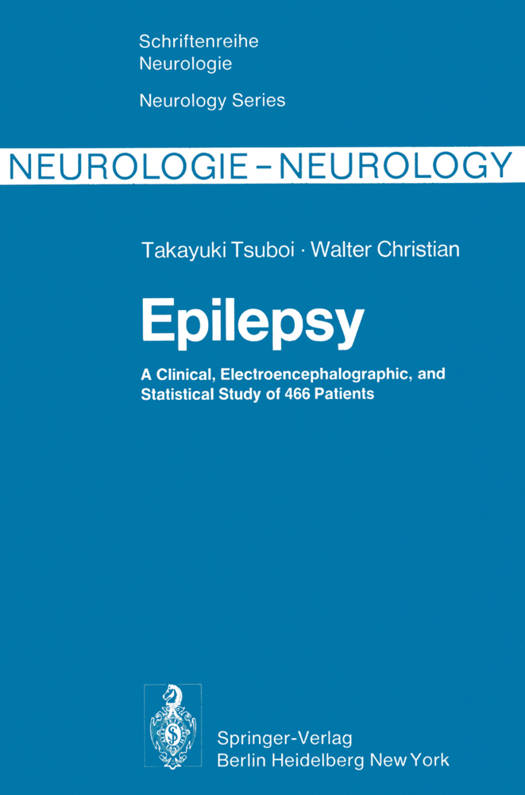
Epilepsy
A Clinical, Electroencephalographic, and Statistical Study of 466 Patients
T Tsuboi, W Christian
€ 118,79
+ 237 punten
Omschrijving
Although a number of studies have addressed epilepsy from a va- riety of qualitative and quantitative factors, relatively little systematic or multidisciplinary work has been reported to date. The general purpose of the present study was to analyze specific kinds of data from a large series of epileptic patients to focus the significance of the findings, particularly in relation to previously published results. Correlations among the following parameters are presented: age, sex, age at onset of seizure, type of seizure, paroxysmal electroencephalogram (EEG) abnormalities, basic EEG rhythm, family predisposition to epilepsy, and the presence of exogenous factors. The basic material of the present study consists of records of approximately 7400 patients treated at the outpatient clinic of the Department of Neurology, University of Heidelberg, in whom the clinical diagnosis suggested some type of epilepsy. Initially, the first consecutive 500 patients in an alphabetically arranged file were chosen for inclusion within the study if their clinical diagnosis was supplemented by at least one EEG examination. The final study group consisted of 466 patients, since 34 patients had to be excluded because of the lack of sufficient clinical information concerning them.
Specificaties
Betrokkenen
- Auteur(s):
- Uitgeverij:
Inhoud
- Aantal bladzijden:
- 174
- Taal:
- Engels
- Reeks:
- Reeksnummer:
- nr. 17
Eigenschappen
- Productcode (EAN):
- 9783642663765
- Verschijningsdatum:
- 15/11/2011
- Uitvoering:
- Paperback
- Formaat:
- Trade paperback (VS)
- Afmetingen:
- 170 mm x 244 mm
- Gewicht:
- 308 g


Alleen bij Standaard Boekhandel
+ 237 punten op je klantenkaart van Standaard Boekhandel
Wedstrijd


Beoordelingen
We publiceren alleen reviews die voldoen aan de voorwaarden voor reviews. Bekijk onze voorwaarden voor reviews.