


- Afhalen na 1 uur in een winkel met voorraad
- Gratis thuislevering in België vanaf € 30
- Ruim aanbod met 7 miljoen producten
- Afhalen na 1 uur in een winkel met voorraad
- Gratis thuislevering in België vanaf € 30
- Ruim aanbod met 7 miljoen producten





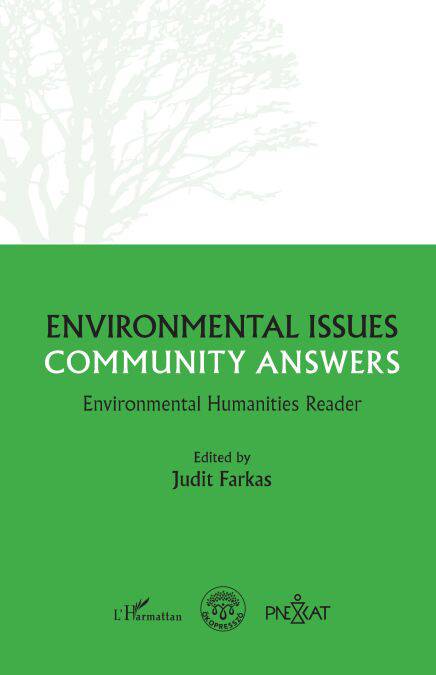
Environmental questions, community responses E-BOOK
Environmental Humanities Reader
Judit Farkas
E-book | Engels
€ 26,99
+ 26 punten
Uitvoering
Eenvoudig bestellen
Veilig betalen


Onmiddellijk geleverd via e-mail
Omschrijving
Environmental Humanities is the product of the 21st century, an age in which it is no longer possible to grasp and manage environmental problems from a single viewpoint. This is true of the scientific method as well. Although fundamentally important for the understanding of ecological issues and changes to the climate, scientific knowledge is not sufficient for providing an adequate answer to the complex phenomenon that is the cause and consequence of the environmental challenges of our century. This is why traditional humanities subjects have been combined with the natural and social sciences and the arts into an interdisciplinary formation in an attempt to understand the causes, current forms, and future trajectories of the contemporary environmental crisis, and to give possible answers to it. This volume is intended to join a body of literature – introductions, textbooks – on Environmental Humanities, adapted to the Hungarian context. Due to its nature, it provides a comprehensive description of several topics, such as environmental philosophy, environmental anthropology, nature art, nature conservation, the relationship between religion and ecology, environmental history, legal, political, and economic issues, social justice, overpopulation, or food dilemmas. In addition, the volume shows community responses to contemporary ecological and social problems with examples from Hungary.
Specificaties
Betrokkenen
- Auteur(s):
- Vertaler(s):
- Uitgeverij:
Inhoud
- Aantal bladzijden:
- 300
- Taal:
- Engels
Eigenschappen
- Productcode (EAN):
- 9782336430232
- Verschijningsdatum:
- 18/09/2024
- Uitvoering:
- E-book
- Beveiligd met:
- Digital watermarking
- Formaat:


Alleen bij Standaard Boekhandel
+ 26 punten op je klantenkaart van Standaard Boekhandel
CADEAU

AANGERADEN


Beoordelingen
We publiceren alleen reviews die voldoen aan de voorwaarden voor reviews. Bekijk onze voorwaarden voor reviews.