


- Afhalen na 1 uur in een winkel met voorraad
- Gratis thuislevering in België vanaf € 30
- Ruim aanbod met 7 miljoen producten
- Afhalen na 1 uur in een winkel met voorraad
- Gratis thuislevering in België vanaf € 30
- Ruim aanbod met 7 miljoen producten





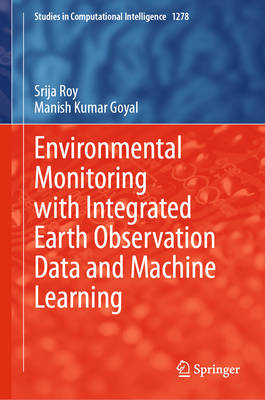
Environmental Monitoring with Integrated Earth Observation Data and Machine Learning
Srija Roy, Manish Kumar Goyal
€ 151,95
+ 303 punten
Eenvoudig bestellen
Veilig betalen


Gratis thuislevering vanaf € 30 (via bpost)
Gratis levering in je Standaard Boekhandel
Omschrijving
This book offers practical insights for researchers and policymakers to demonstrate how EO and ML can strengthen environmental monitoring to support informed decision-making, and advance sustainable development. The Earth faces rising challenges like climate instability, land degradation, water scarcity, rapid urban expansion, etc., making reliable environmental monitoring imperative. Traditional methods lack the precision and scale required for global environmental monitoring. However, advances in Earth Observation (EO) and Machine Learning (ML) enable accurate, large-scale environmental monitoring through accessible open-source datasets. Further ML integration with these datasets supports predictive analysis and detailed environmental assessments. Thus, this book outlines the principles of EO, data management, ML integration, and applies them through a case study of the Narmada River Basin, India to examine land use, pollution, and the overall environmental conditions.
Specificaties
Betrokkenen
- Auteur(s):
- Uitgeverij:
Inhoud
- Aantal bladzijden:
- 84
- Taal:
- Engels
- Reeks:
- Reeksnummer:
- nr. 1278
Eigenschappen
- Productcode (EAN):
- 9783032199348
- Verschijningsdatum:
- 15/05/2026
- Uitvoering:
- Hardcover
- Formaat:
- Genaaid
- Afmetingen:
- 155 mm x 235 mm
- Gewicht:
- 280 g


Alleen bij Standaard Boekhandel
+ 303 punten op je klantenkaart van Standaard Boekhandel
CADEAU

AANGERADEN


Beoordelingen
We publiceren alleen reviews die voldoen aan de voorwaarden voor reviews. Bekijk onze voorwaarden voor reviews.