



- Afhalen na 1 uur in een winkel met voorraad
- In januari gratis thuislevering in België
- Ruim aanbod met 7 miljoen producten
- Afhalen na 1 uur in een winkel met voorraad
- In januari gratis thuislevering in België
- Ruim aanbod met 7 miljoen producten





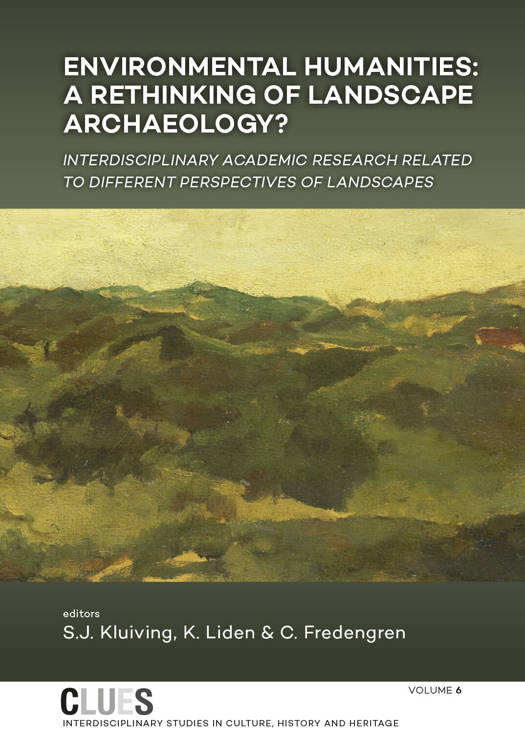
Environmental Humanities
A Rethinking of Landscape Archaeology? Interdisciplinary Academic Research Related to Different Perspectives of Landscapes
€ 30,00
+ 60 punten
Omschrijving
There has been an increasing archaeological interest in human-animal-nature relations, where archaeology has shifted from a focus on deciphering meaning, or understanding symbols and the social construction of the landscape to an acknowledgment of how things, places, and the environment contribute with their own agencies to the shaping of relations.
This means that the environment cannot be regarded as a blank space that landscape meaning is projected onto. Parallel to this, the field of environmental humanities poses the question of how to work with the intermeshing of humans and their surroundings.
To allow the environment back in as an active agent of change, means that landscape archaeology can deal better with issues such as global warming, an escalating loss of biodiversity, as well as increasingly toxic environment. However, this does not leave human agency out of the equation. It is humans who reinforce the environmental challenges of today.
The scholarly field of the humanities deal with questions like how is meaning attributed, what cultural factors drive human action, what role is played by ethics, how is landscape experienced emotionally, as well as how concepts derived from art, literature, and history function in such processes of meaning attribution and other cultural processes. This humanities approach is of utmost importance when dealing with climate and environmental challenges ahead and we need a new landscape archaeology that meets these challenges, but also that meets well across disciplinary boundaries. Here inspiration can be found in discussions with scholars in the emerging field of Environmental Humanities.
This means that the environment cannot be regarded as a blank space that landscape meaning is projected onto. Parallel to this, the field of environmental humanities poses the question of how to work with the intermeshing of humans and their surroundings.
To allow the environment back in as an active agent of change, means that landscape archaeology can deal better with issues such as global warming, an escalating loss of biodiversity, as well as increasingly toxic environment. However, this does not leave human agency out of the equation. It is humans who reinforce the environmental challenges of today.
The scholarly field of the humanities deal with questions like how is meaning attributed, what cultural factors drive human action, what role is played by ethics, how is landscape experienced emotionally, as well as how concepts derived from art, literature, and history function in such processes of meaning attribution and other cultural processes. This humanities approach is of utmost importance when dealing with climate and environmental challenges ahead and we need a new landscape archaeology that meets these challenges, but also that meets well across disciplinary boundaries. Here inspiration can be found in discussions with scholars in the emerging field of Environmental Humanities.
Specificaties
Betrokkenen
- Uitgeverij:
Inhoud
- Aantal bladzijden:
- 108
- Taal:
- Engels
- Reeks:
Eigenschappen
- Productcode (EAN):
- 9789464270037
- Verschijningsdatum:
- 5/05/2021
- Uitvoering:
- Paperback
- Formaat:
- Trade paperback (VS)
- Afmetingen:
- 178 mm x 254 mm
- Gewicht:
- 316 g

Alleen bij Standaard Boekhandel
+ 60 punten op je klantenkaart van Standaard Boekhandel
Cadeau

AANGERADEN


Beoordelingen
We publiceren alleen reviews die voldoen aan de voorwaarden voor reviews. Bekijk onze voorwaarden voor reviews.