


- Afhalen na 1 uur in een winkel met voorraad
- Gratis thuislevering in België vanaf € 30
- Ruim aanbod met 7 miljoen producten
- Afhalen na 1 uur in een winkel met voorraad
- Gratis thuislevering in België vanaf € 30
- Ruim aanbod met 7 miljoen producten





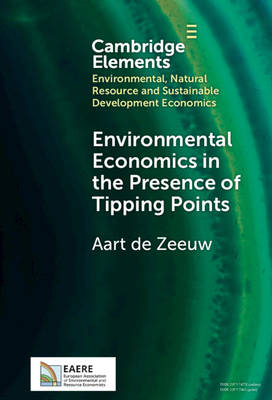
Environmental Economics in the Presence of Tipping Points
Aart de Zeeuw
Hardcover | Engels | Elements in Environmental, Natural Resource and Sustainable Development Economic
€ 79,45
+ 158 punten
Uitvoering
Eenvoudig bestellen
Veilig betalen


Gratis thuislevering vanaf € 30 (via bpost)
Gratis levering in je Standaard Boekhandel
Omschrijving
Environmental economics is growing rapidly. It is simply not sufficient to consider consumption, production, and welfare in isolation from the natural environment. Integrating ecological systems in economic analysis requires to take the possible occurrence of tipping points or regime shifts into account. This Element focuses on two recent developments in environmental economics theory. One is economic management of ecological systems with tipping points, with the lake as the classical example. The other one is investigating the consequences of uncertain possible shocks to parameters in economic models, with the carrying capacity in a fishery and total factor productivity (due to climate tipping) in Ramsey growth as examples. This Element provides a precise account of the concepts, techniques, and results in the analysis of these models, which shows the effects of tipping and allows for other applications. This Element starts with a broader list of examples and management options.
Specificaties
Betrokkenen
- Auteur(s):
- Uitgeverij:
Inhoud
- Aantal bladzijden:
- 76
- Taal:
- Engels
- Reeks:
Eigenschappen
- Productcode (EAN):
- 9781009688703
- Verschijningsdatum:
- 11/06/2026
- Uitvoering:
- Hardcover
- Formaat:
- Genaaid
- Afmetingen:
- 152 mm x 229 mm
- Gewicht:
- 276 g


Alleen bij Standaard Boekhandel
+ 158 punten op je klantenkaart van Standaard Boekhandel
CADEAU

AANGERADEN


Beoordelingen
We publiceren alleen reviews die voldoen aan de voorwaarden voor reviews. Bekijk onze voorwaarden voor reviews.