


- Afhalen na 1 uur in een winkel met voorraad
- Gratis thuislevering in België vanaf € 30
- Ruim aanbod met 7 miljoen producten
- Afhalen na 1 uur in een winkel met voorraad
- Gratis thuislevering in België vanaf € 30
- Ruim aanbod met 7 miljoen producten





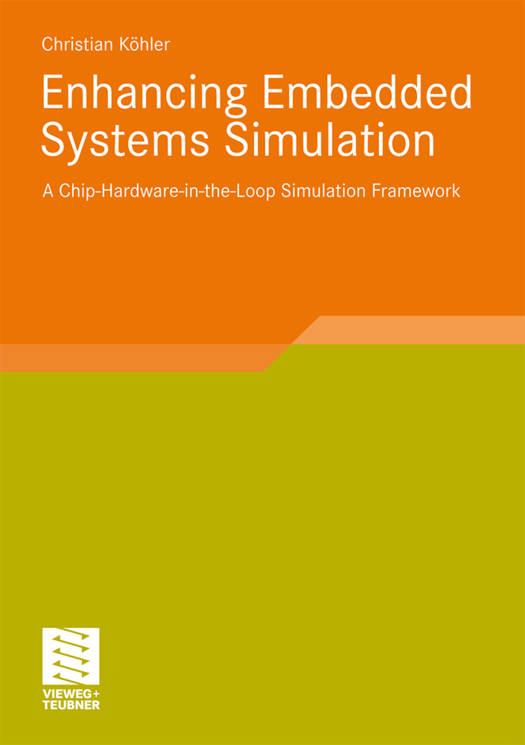
Enhancing Embedded Systems Simulation
A Chip-Hardware-In-The-Loop Simulation Framework
Christian Köhler
Paperback | Engels
€ 118,95
+ 237 punten
Omschrijving
Using the real Microcontroller (µC) as a replacement for a µC model inside a system simulation of a µC-based system is a big benefit since the µC is already verified. Moreover, its maximum performance and its accuracy are much higher than any simulation model.
With the Chip-Hardware-in-the-Loop Simulation (CHILS) approach, Christian Köhler covers the connection between µC and simulation, the analysis and optimization of such coupling systems as well as the interface abstraction. He develops the hardware to simulation coupling system with a focus on less hardware effort, the capabilities to couple with different simulation environments, and the efficiency of coupling. The interface abstraction primarily supports the efficiency of coupling. The system analysis and optimization concepts include formal criteria to determine the fidelity of Hardware-in-the-Loop (HIL) coupling systems, stability analysis of coupling systems, and the numerical analysis of applied software algorithms. Furthermore, the author presents existing concepts to simulate complex systems and compares them with the new approach.
With the Chip-Hardware-in-the-Loop Simulation (CHILS) approach, Christian Köhler covers the connection between µC and simulation, the analysis and optimization of such coupling systems as well as the interface abstraction. He develops the hardware to simulation coupling system with a focus on less hardware effort, the capabilities to couple with different simulation environments, and the efficiency of coupling. The interface abstraction primarily supports the efficiency of coupling. The system analysis and optimization concepts include formal criteria to determine the fidelity of Hardware-in-the-Loop (HIL) coupling systems, stability analysis of coupling systems, and the numerical analysis of applied software algorithms. Furthermore, the author presents existing concepts to simulate complex systems and compares them with the new approach.
Specificaties
Betrokkenen
- Auteur(s):
- Uitgeverij:
Inhoud
- Aantal bladzijden:
- 224
- Taal:
- Engels
Eigenschappen
- Productcode (EAN):
- 9783834814753
- Verschijningsdatum:
- 24/02/2011
- Uitvoering:
- Paperback
- Formaat:
- Trade paperback (VS)
- Afmetingen:
- 148 mm x 210 mm
- Gewicht:
- 299 g


Alleen bij Standaard Boekhandel
+ 237 punten op je klantenkaart van Standaard Boekhandel
AANGERADEN


Beoordelingen
We publiceren alleen reviews die voldoen aan de voorwaarden voor reviews. Bekijk onze voorwaarden voor reviews.