


- Afhalen na 1 uur in een winkel met voorraad
- Gratis thuislevering in België vanaf € 30
- Ruim aanbod met 7 miljoen producten
- Afhalen na 1 uur in een winkel met voorraad
- Gratis thuislevering in België vanaf € 30
- Ruim aanbod met 7 miljoen producten





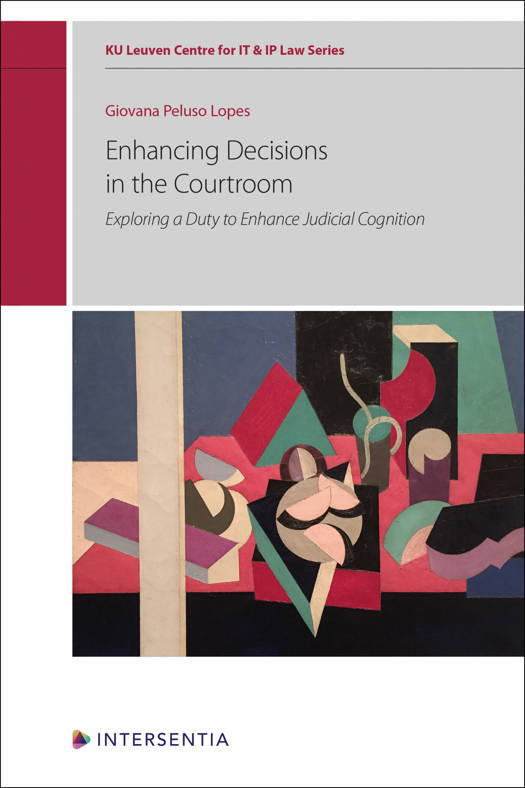
Enhancing Decisions in the Courtroom
Exploring a Duty to Enhance Judicial Cognition
Giovana Peluso Lopes
€ 140,00
+ 280 punten
Omschrijving
<>This book explores possible ethical justifications for a moral duty for judges to enhance their cognition and examines how this duty sits within the existing legal framework on judicial liability, professional duties, and human rights. The impetus behind this inquiry stems from the realization, substantiated by a wealth of empirical evidence, that judges are susceptible to various implicit biases, which can subtly shape their perceptions, judgments, and decision-making processes throughout various stages of legal proceedings. Despite posing a threat to the impartiality and accuracy of judicial decisions, implicit biases remain largely unaddressed within the judiciary. Existing substantive and procedural rules designed to prevent arbitrary, partial, or inaccurate legal decisions primarily focus on the explicit manifestations of biases, neglecting to adequately address the negative effects of biases that operate beneath the level of consciousness, and which are not subject to direct introspection. Considering the profound impact of judicial decision-making for litigants and society, this book investigates the possibility of enhancing judicial cognition by various methods and technologies, and proposes a normative framework for the cognitive enhancement of judges.<>Giovana Peluso Lopes is a postdoctoral researcher on fundamental rights and artificial intelligence at the Tilburg Institute for Law, Technology, and Society (TILT), Tilburg University (Netherlands). She holds a joint PhD in Law, Science, and Technology from the University of Bologna and KU Leuven – where she was an affiliated research fellow at the Centre for IT & IP Law (CiTiP). Her research focuses on the intersection of technology and law, including the impact of AI on fundamental rights, the use of AI in the judiciary, and the law and ethics of neurotechnologies.
Specificaties
Betrokkenen
- Auteur(s):
- Uitgeverij:
Inhoud
- Aantal bladzijden:
- 403
- Taal:
- Engels
- Reeks:
Eigenschappen
- Productcode (EAN):
- 9781839705700
- Verschijningsdatum:
- 20/05/2025
- Uitvoering:
- Hardcover
- Afmetingen:
- 160 mm x 240 mm
- Gewicht:
- 700 g


Alleen bij Standaard Boekhandel
+ 280 punten op je klantenkaart van Standaard Boekhandel
Cadeau

AANGERADEN


Beoordelingen
We publiceren alleen reviews die voldoen aan de voorwaarden voor reviews. Bekijk onze voorwaarden voor reviews.