


- Afhalen na 1 uur in een winkel met voorraad
- Gratis thuislevering in België vanaf € 30
- Ruim aanbod met 7 miljoen producten
- Afhalen na 1 uur in een winkel met voorraad
- Gratis thuislevering in België vanaf € 30
- Ruim aanbod met 7 miljoen producten





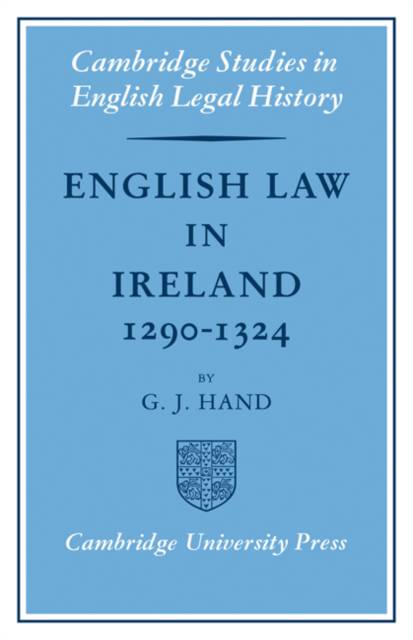
English Law in Ireland 1290-1324
G J Hand
€ 76,45
+ 152 punten
Omschrijving
Although the Englishmen who crossed the Irish Sea from 1169 onward brought with them their own speech and legal code, the credit for the creation of a firm basis for the alien English Law and legal institutions belongs to King John, when his accession united the Lordship of Ireland with the English Crown. Dr Hand begins his study of English Law in Ireland by tracing its development up to 1290. He confines his detailed analysis, however, to the years 1290-1324, considering the influence of statute law and Irish custom on, and the position of the native Irishman under English Law. This period is chosen partly because almost all justiciary rolls surviving until modern times derived from the early fourteenth century, and partly because those years saw the flowering of medieval Anglo-Irish culture.
Specificaties
Betrokkenen
- Auteur(s):
- Uitgeverij:
Inhoud
- Aantal bladzijden:
- 300
- Taal:
- Engels
- Reeks:
Eigenschappen
- Productcode (EAN):
- 9780521085380
- Verschijningsdatum:
- 14/10/2008
- Uitvoering:
- Paperback
- Formaat:
- Trade paperback (VS)
- Afmetingen:
- 140 mm x 216 mm
- Gewicht:
- 381 g


Alleen bij Standaard Boekhandel
+ 152 punten op je klantenkaart van Standaard Boekhandel
Cadeau

AANGERADEN


Beoordelingen
We publiceren alleen reviews die voldoen aan de voorwaarden voor reviews. Bekijk onze voorwaarden voor reviews.