


- Afhalen na 1 uur in een winkel met voorraad
- Gratis thuislevering in België vanaf € 30
- Ruim aanbod met 7 miljoen producten
- Afhalen na 1 uur in een winkel met voorraad
- Gratis thuislevering in België vanaf € 30
- Ruim aanbod met 7 miljoen producten





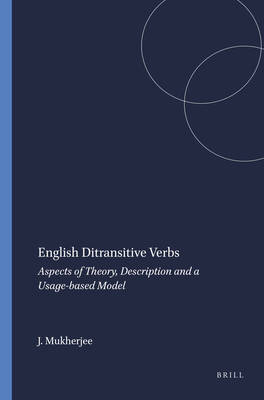
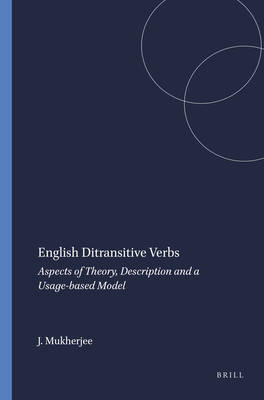
English Ditransitive Verbs
Aspects of Theory, Description and a Usage-Based Model
Joybrato Mukherjee
€ 71,38
+ 142 punten
Omschrijving
The present book offers fresh insights into the description of ditransitive verbs and their complementation in present-day English. In the theory-oriented first part, a pluralist framework is developed on the basis of previous research that integrates ditransitive verbs as lexical items with both the entirety of their complementation patterns and the cognitive and semantic aspects of ditransitivity. This approach is combined with modern corpus-linguistic methodology in the present study, which draws on an exhaustive semi-automatic analysis of all patterns of ditransitive verbs in the British component of the International Corpus of English (ICE-GB) and also takes into account selected data from the British National Corpus (BNC). In the second part of the study, the complementation of ditransitive verbs (e.g. give, send) is analysed quantitatively and qualitatively. Special emphasis is placed here on the identification of significant principles of pattern selection, i.e. factors that lead language users to prefer specific patterns over other patterns in given contexts (e.g. weight, focus, pattern flow in text, lexical constraints). In the last part, some general aspects of a network-like, usage-based model of ditransitive verbs, their patterns and the relevant principles of pattern selection are sketched out, thus bridging the gap between the performance-related description of language use and a competence-related model of language cognition.
Specificaties
Betrokkenen
- Auteur(s):
- Uitgeverij:
Inhoud
- Aantal bladzijden:
- 304
- Taal:
- Engels
- Reeks:
- Reeksnummer:
- nr. 53
Eigenschappen
- Productcode (EAN):
- 9789042019348
- Verschijningsdatum:
- 1/01/2005
- Uitvoering:
- Hardcover
- Formaat:
- Genaaid
- Afmetingen:
- 155 mm x 230 mm
- Gewicht:
- 639 g


Alleen bij Standaard Boekhandel
+ 142 punten op je klantenkaart van Standaard Boekhandel
Cadeau

AANGERADEN


Beoordelingen
We publiceren alleen reviews die voldoen aan de voorwaarden voor reviews. Bekijk onze voorwaarden voor reviews.