



Bedankt voor het vertrouwen het afgelopen jaar! Om jou te bedanken bieden we GRATIS verzending (in België) aan op alles gedurende de hele maand januari.
- Afhalen na 1 uur in een winkel met voorraad
- In januari gratis thuislevering in België
- Ruim aanbod met 7 miljoen producten
Bedankt voor het vertrouwen het afgelopen jaar! Om jou te bedanken bieden we GRATIS verzending (in België) aan op alles gedurende de hele maand januari.
- Afhalen na 1 uur in een winkel met voorraad
- In januari gratis thuislevering in België
- Ruim aanbod met 7 miljoen producten





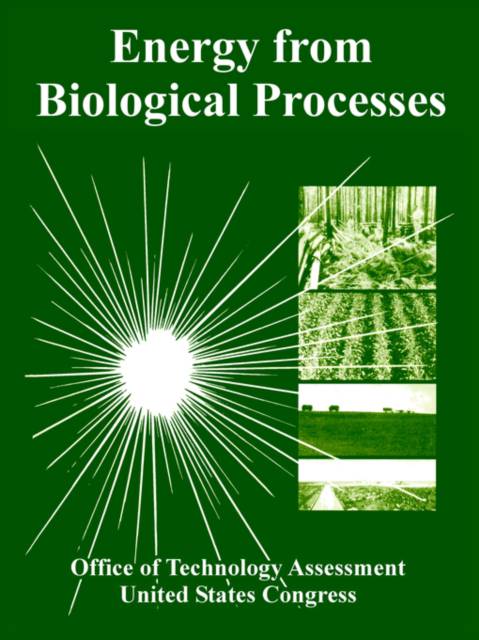
Energy from Biological Processes
Office of Technology Assessment, United States Congress
Paperback | Engels
€ 35,45
+ 70 punten
Omschrijving
This assessment responds to a request by the Senate Committee on Commerce, Science, and Transportation for an evaluation of the energy potential of various sources of plant and animal matter (biomass). This report complements an earlier OTA report on the Application of Solar Technology to Today's Energy Needs in evaluating the major solar energy resources available to the United States. The findings also will serve as part of the material to be used in an upcoming OTA assessment of synthetic fuels for transportation. Volume I presents analyses of prominent biomass issues, summaries of four biomass fuel cycles, a description of biomass' place in two plausible energy futures, and discussions of policy options for promoting energy from biomass. The four fuel cycles--wood, alcohol fuels, grasses and crop residues, and animal wastes--were chosen because of their near- to mid-term energy potential and because of the public interest in them. Volume II presents the technical and environmental analyses on which the conclusions of Volume I are based. The "Part I: Biomass Resource Base" includes forestry, agriculture processing wastes, and various unconventional sources including oil-bearing and aquatic plants. "Part II: Conversion Technologies and End Uses" considers thermochemical conversions, fermentation for ethanol production, anaerobic digestion, use of alcohol fuels, select energy balances, and a brief description of chemical from biomass. In each case, appropriate technical, economic, and environmental details are presented and analyzed.
Specificaties
Betrokkenen
- Auteur(s):
- Uitgeverij:
Inhoud
- Aantal bladzijden:
- 456
- Taal:
- Engels
Eigenschappen
- Productcode (EAN):
- 9781410224279
- Verschijningsdatum:
- 16/06/2005
- Uitvoering:
- Paperback
- Formaat:
- Trade paperback (VS)
- Afmetingen:
- 210 mm x 279 mm
- Gewicht:
- 1016 g


Alleen bij Standaard Boekhandel
+ 70 punten op je klantenkaart van Standaard Boekhandel
SOLDEN


Beoordelingen
We publiceren alleen reviews die voldoen aan de voorwaarden voor reviews. Bekijk onze voorwaarden voor reviews.