


- Afhalen na 1 uur in een winkel met voorraad
- Gratis thuislevering in België vanaf € 30
- Ruim aanbod met 7 miljoen producten
- Afhalen na 1 uur in een winkel met voorraad
- Gratis thuislevering in België vanaf € 30
- Ruim aanbod met 7 miljoen producten





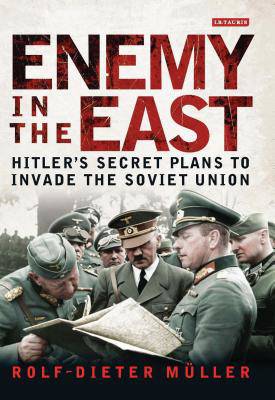
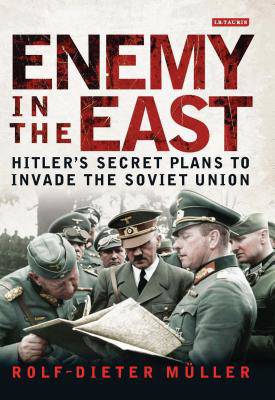
Enemy in the East
Hitler's Secret Plans to Invade the Soviet Union
Rolf-Dieter Müller
Hardcover | Engels
€ 79,45
+ 158 punten
Omschrijving
Operation Barbarossa, Hitler's invasion of the Soviet Union in 1941, led to one of the most brutal campaigns of World War II: of the estimated 70 million people who died in World War II, over 30 million died on the Eastern Front. Although it has previously been argued that the campaign was a pre-emptive strike, in fact, Hitler had been planning a war of intervention against the USSR ever since he came to power in 1933. Using previously unseen sources, acclaimed military historian Rolf-Dieter Muller shows that Hitler and the Wehrmacht had begun to negotiate with Poland and had even considered an alliance with Japan soon after taking power. Despite the signing of the Molotov-Ribbentrop Pact, at the declaration of war in September 1939, military engagement with the Red Army was still a very real and imminent possibility. In this book, Muller takes us behind the scenes of the Wehrmacht High Command, providing a fascinating insight into an unknown story of World War II.
Specificaties
Betrokkenen
- Auteur(s):
- Uitgeverij:
Inhoud
- Aantal bladzijden:
- 336
- Taal:
- Engels
Eigenschappen
- Productcode (EAN):
- 9781780768298
- Verschijningsdatum:
- 3/02/2015
- Uitvoering:
- Hardcover
- Formaat:
- Genaaid
- Afmetingen:
- 160 mm x 233 mm
- Gewicht:
- 612 g


Alleen bij Standaard Boekhandel
+ 158 punten op je klantenkaart van Standaard Boekhandel
Cadeau

AANGERADEN


Beoordelingen
We publiceren alleen reviews die voldoen aan de voorwaarden voor reviews. Bekijk onze voorwaarden voor reviews.