


- Afhalen na 1 uur in een winkel met voorraad
- Gratis thuislevering in België vanaf € 30
- Ruim aanbod met 7 miljoen producten
- Afhalen na 1 uur in een winkel met voorraad
- Gratis thuislevering in België vanaf € 30
- Ruim aanbod met 7 miljoen producten




€ 167,95
+ 335 punten
Uitvoering
Omschrijving
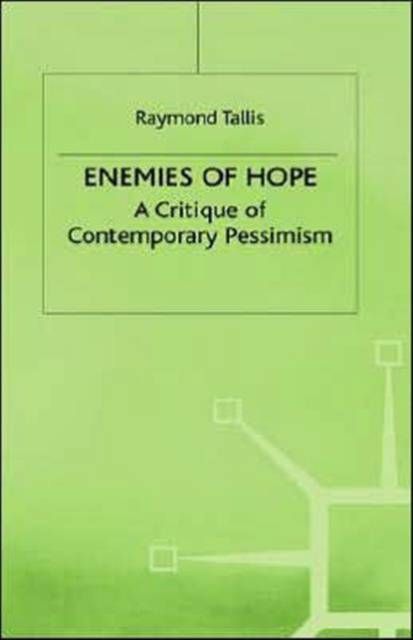
Over the last few years, Raymond Tallis has published widely acclaimed critiques of influential trends in contemporary thought: for example, Not Saussure - described as 'one of the most brilliant and effective of all rebuttals of post-Saussurean theory' - In Defence of Realism and The Explicit Animal, which demonstrated the baselessness of contemporary accounts of consciousness. Enemies of Hope takes the story further, identifying the themes common to anti-humanist twentieth-century thought and challenging the cult of pessimism that pervades our age. Tallis teases out the many strands of the comfortable, self-congratulatory cynicism of modernist and postmodernist cultural critics, exposing their self-contradictions and their wilful blindness to the distinctive mystery of human nature. The 'pathologisers of culture' and 'the marginalisers of consciousness' are shown to be the enemies of hope - the hope of progress based upon the rational, conscious endeavours of humankind. Perceptive, passionate and often controversial, Raymond Tallis's latest debunking of Kulturkritik explores a host of ethical and philosophical issues central to contemporary thought, raising questions we cannot afford to ignore. After reading Enemies of Hope, those minded to misrepresent mankind in ways that are almost routine amongst humanist intellectuals may be inclined to think twice. By clearing away the hysterical anti-humanism of the twentieth century Enemies of Hope frees us to start thinking constructively about the way forward for humanity in the twenty-first.
Specificaties
Betrokkenen
- Auteur(s):
- Uitgeverij:
Inhoud
- Aantal bladzijden:
- 499
- Taal:
- Engels
Eigenschappen
- Productcode (EAN):
- 9780312173265
- Verschijningsdatum:
- 12/06/1997
- Uitvoering:
- Hardcover
- Formaat:
- Genaaid
- Afmetingen:
- 163 mm x 242 mm
- Gewicht:
- 929 g



Alleen bij Standaard Boekhandel
+ 335 punten op je klantenkaart van Standaard Boekhandel
AANGERADEN


Beoordelingen
We publiceren alleen reviews die voldoen aan de voorwaarden voor reviews. Bekijk onze voorwaarden voor reviews.