


- Afhalen na 1 uur in een winkel met voorraad
- Gratis thuislevering in België vanaf € 30
- Ruim aanbod met 7 miljoen producten
- Afhalen na 1 uur in een winkel met voorraad
- Gratis thuislevering in België vanaf € 30
- Ruim aanbod met 7 miljoen producten





€ 201,95
+ 403 punten
Omschrijving
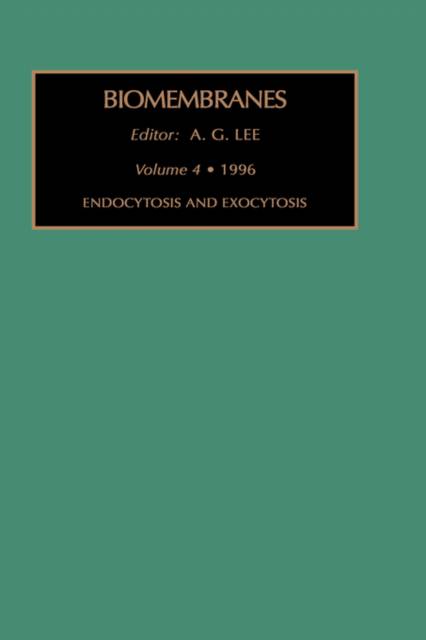
Volume 4 of Biomembranes covers endocytosis, exocytosis and related processes. A major role of the plasma membrane is as a permeability barrier, keeping the inside of the cell inside and the outside, outside. Mechanisms must then exist to allow movement of material between the cell and its environment. One mechanism for export from the cell is by exocytosis, a process in which the membranes of secretory vesicles fuse with the plasma membrane releasing the contents of the vesicle into the extracellular medium. The process has been studied in particular depth for the release of neurotransmitters at the synapse. Import into the cell is possible by the process of receptor-mediated endocytosis in which selected plasma membrane proteins are internalizes; when these proteins are receptors for macromolecules, the result is uptake of the macromolecule. Transferring, the low-density lipoprotein, and asialoglycoproteins are all taken up into cells in this way. Phagocytosis, the ingestion of cells and cell fragments by neutrophils and macrophages, also involves receptors - on the phagocytic membrane - of which the best studied are those for the Fc domain of IgG, for the third component of complement, and for the mannose/fructose carbohydrates. Protection of a host against infection can also be achieved by damaging the integrity of the plasma membrane of the invading organism. This is the strategy evolved by the cytotoxic T lymphocytes, which produce a pore-forming toxin, perforin. Volume 4 of Biomembranes explores the structures and mechanisms involved in these biologically and medically important processes.
Specificaties
Betrokkenen
- Auteur(s):
- Uitgeverij:
Inhoud
- Aantal bladzijden:
- 294
- Taal:
- Engels
- Reeks:
- Reeksnummer:
- nr. 4
Eigenschappen
- Productcode (EAN):
- 9781559386616
- Verschijningsdatum:
- 17/12/1996
- Uitvoering:
- Hardcover
- Formaat:
- Genaaid
- Afmetingen:
- 156 mm x 234 mm
- Gewicht:
- 607 g



Alleen bij Standaard Boekhandel
+ 403 punten op je klantenkaart van Standaard Boekhandel
Cadeau

AANGERADEN


Beoordelingen
We publiceren alleen reviews die voldoen aan de voorwaarden voor reviews. Bekijk onze voorwaarden voor reviews.