


- Afhalen na 1 uur in een winkel met voorraad
- Gratis thuislevering in België vanaf € 30
- Ruim aanbod met 7 miljoen producten
- Afhalen na 1 uur in een winkel met voorraad
- Gratis thuislevering in België vanaf € 30
- Ruim aanbod met 7 miljoen producten





€ 30,45
+ 60 punten
Omschrijving
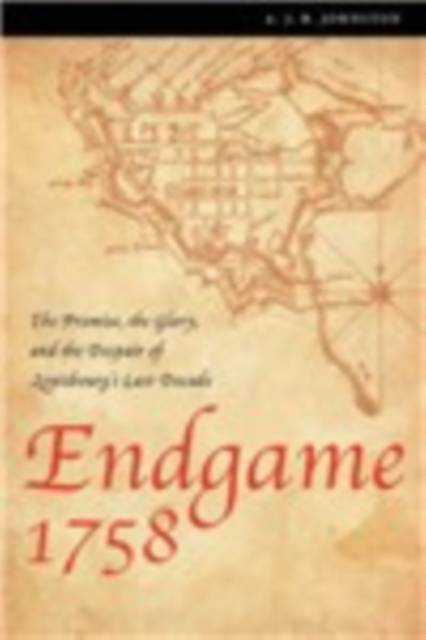
The story of what happened at the colonial fortified town of Louisbourg between 1749 and 1758 is one of the great dramas of the history of Canada, indeed North America. The French stronghold on Cape Breton Island, strategically situated near the entrance to the Gulf of St. Lawrence, was from soon after its founding a major possession in the quest for empire. The dramatic military and social history of this short-lived and significant fortress, seaport, and community, and the citizens who made it their home, are woven together in A. J. B. Johnston's gripping biography of the colony's final decade, presented from both French and British perspectives. Endgame 1758 is a tale of two empires in collision on the shores of mid-eighteenth-century Atlantic Canada, where rival European visions of predominance clashed headlong with each other and with the region's Aboriginal peoples. The magnitude of the struggle and of its uncertain outcome colored the lives of Louisbourg's inhabitants and the nearly thirty thousand combatants arrayed against it. The entire history comes to life in a tale of what turned out to be the first major British victory in the Seven Years' War. How and why the French colony ended the way it did, not just in June and July 1758, but over the decade that preceded the siege, is a little-known and compelling story.
Specificaties
Betrokkenen
- Auteur(s):
- Uitgeverij:
Inhoud
- Aantal bladzijden:
- 382
- Taal:
- Engels
- Reeks:
Eigenschappen
- Productcode (EAN):
- 9780803260092
- Verschijningsdatum:
- 01/01/2008
- Uitvoering:
- Paperback
- Formaat:
- Trade paperback (VS)
- Afmetingen:
- 155 mm x 226 mm
- Gewicht:
- 498 g



Alleen bij Standaard Boekhandel
+ 60 punten op je klantenkaart van Standaard Boekhandel
Cadeau

AANGERADEN


Beoordelingen
We publiceren alleen reviews die voldoen aan de voorwaarden voor reviews. Bekijk onze voorwaarden voor reviews.