



- Afhalen na 1 uur in een winkel met voorraad
- In januari gratis thuislevering in België
- Ruim aanbod met 7 miljoen producten
- Afhalen na 1 uur in een winkel met voorraad
- In januari gratis thuislevering in België
- Ruim aanbod met 7 miljoen producten





€ 2,99
+ 2 punten
Omschrijving
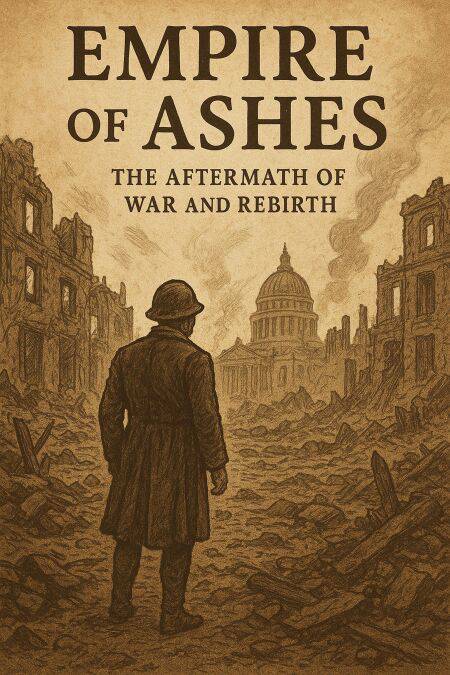
Empire of Ashes: The Aftermath of War and Rebirth is a sweeping, reflective history of what happens after the cannons fall silent and an empire collapses. Rather than narrating battles and generals, the book begins on "the day after" the war: shattered cities, broken infrastructure, and a traumatized population trying simply to survive. From there, it follows the long, uneven arc by which a ruined society struggles to rebuild itself—materially, politically, and morally.
The book moves from the intimate to the structural. It dwells on the human toll—maimed veterans, widows, orphans, displaced families, and the psychological scars that linger for decades. It examines the collapse of imperial institutions and the fierce debates over guilt, justice, and responsibility. Treaties, new borders, and economic plans are shown not as abstractions, but as lines drawn across real lives, creating new minorities, resentments, and dependencies.
At the same time, Empire of Ashes traces the slow re‑creation of everyday life: the clearing of rubble and reconstruction of cities, the reviving of the countryside, the reopening of schools and hospitals. It highlights the crucial roles played by women, children, and local communities in holding social fabric together when states falter. Culture and ideas—art, literature, music, religion, science, and ideology—are treated as active forces that help societies interpret catastrophe and imagine alternatives, whether in the form of nationalism, democracy, socialism, or authoritarian revival.
The narrative ranges from imperial centers to forgotten frontiers and colonies, integrating the experience of peripheries, occupation, aid, and decolonization into the larger story. It follows generations forward: how the war is mourned, remembered, distorted, and eventually inherited by those who did not live through it, and how old hatreds and myths can return if not consciously confronted.
Ultimately, Empire of Ashes is less about the death of an empire than about the ambiguous nature of rebirth. It shows that reconstruction is never clean: new orders preserve fragments of the old, justice is partial, memory is contested, and peace is always provisional. Yet within the ruins, the book also finds resilience and a cautious hope—the possibility that societies, having seen the worst they can do, may sometimes choose differently when the next crossroads comes.
Specificaties
Betrokkenen
- Auteur(s):
- Uitgeverij:
Inhoud
- Taal:
- Engels
Eigenschappen
- Productcode (EAN):
- 9798232922467
- Verschijningsdatum:
- 3/12/2025
- Uitvoering:
- E-book
- Formaat:
- ePub


Alleen bij Standaard Boekhandel
+ 2 punten op je klantenkaart van Standaard Boekhandel
Cadeau

AANGERADEN


Beoordelingen
We publiceren alleen reviews die voldoen aan de voorwaarden voor reviews. Bekijk onze voorwaarden voor reviews.