


- Afhalen na 1 uur in een winkel met voorraad
- Gratis thuislevering in België vanaf € 30
- Ruim aanbod met 7 miljoen producten
- Afhalen na 1 uur in een winkel met voorraad
- Gratis thuislevering in België vanaf € 30
- Ruim aanbod met 7 miljoen producten





€ 48,45
+ 96 punten
Eenvoudig bestellen
Veilig betalen


Gratis thuislevering vanaf € 30 (via bpost)
Gratis levering in je Standaard Boekhandel
Omschrijving
"British academic McHugh, who has written on the Emperor Commodus and other subjects, does a masterful job in giving us this life of Alexander Severus set within his unstable times which presaged even more instability... This is a rich work, and valuable for anyone with an interest in the Roman Empire." - The NYMAS Review
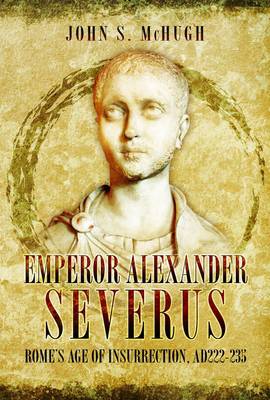
Alexander Severus' is full of controversy and contradictions. He came to the throne through the brutal murder of his cousin, Elagabalus, and was ultimately assassinated himself. The years between were filled with regular uprisings and rebellions, court intrigue (the Praetorian Guard slew their commander at the Emperor's feet) and foreign invasion. Yet the ancient sources generally present his reign as a golden age of just government, prosperity and religious tolerance
Not yet fourteen when he became emperor, Alexander was dominated by his mother, Julia Mammaea and advisors like the historian, Cassius Dio. In the military field, he successfully checked the aggressive Sassanid Persians but some sources see his Persian campaign as a costly failure marked by mutiny and reverses that weakened the army. When Germanic and Sarmatian tribes crossed the Rhine and Danube frontiers in 234, Alexander took the field against them but when he attempted to negotiate to buy time, his soldiers perceived him as weak, assassinated him and replaced him with the soldier Maximinus Thrax. John McHugh re-assesses this fascinating emperor in detail.
Alexander Severus' is full of controversy and contradictions. He came to the throne through the brutal murder of his cousin, Elagabalus, and was ultimately assassinated himself. The years between were filled with regular uprisings and rebellions, court intrigue (the Praetorian Guard slew their commander at the Emperor's feet) and foreign invasion. Yet the ancient sources generally present his reign as a golden age of just government, prosperity and religious tolerance
Not yet fourteen when he became emperor, Alexander was dominated by his mother, Julia Mammaea and advisors like the historian, Cassius Dio. In the military field, he successfully checked the aggressive Sassanid Persians but some sources see his Persian campaign as a costly failure marked by mutiny and reverses that weakened the army. When Germanic and Sarmatian tribes crossed the Rhine and Danube frontiers in 234, Alexander took the field against them but when he attempted to negotiate to buy time, his soldiers perceived him as weak, assassinated him and replaced him with the soldier Maximinus Thrax. John McHugh re-assesses this fascinating emperor in detail.
Specificaties
Betrokkenen
- Auteur(s):
- Uitgeverij:
Inhoud
- Aantal bladzijden:
- 352
- Taal:
- Engels
Eigenschappen
- Productcode (EAN):
- 9781036151362
- Verschijningsdatum:
- 30/01/2026
- Uitvoering:
- Paperback
- Formaat:
- Trade paperback (VS)
- Afmetingen:
- 159 mm x 235 mm
- Gewicht:
- 480 g


Alleen bij Standaard Boekhandel
+ 96 punten op je klantenkaart van Standaard Boekhandel
CADEAU

AANGERADEN


Beoordelingen
We publiceren alleen reviews die voldoen aan de voorwaarden voor reviews. Bekijk onze voorwaarden voor reviews.