


- Afhalen na 1 uur in een winkel met voorraad
- Gratis thuislevering in België vanaf € 30
- Ruim aanbod met 7 miljoen producten
- Afhalen na 1 uur in een winkel met voorraad
- Gratis thuislevering in België vanaf € 30
- Ruim aanbod met 7 miljoen producten





€ 36,45
+ 72 punten
Uitvoering
Omschrijving
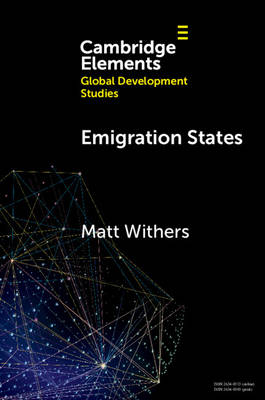
Guestworker migration has become an increasingly prominent feature within the economic landscape of the Asia-Pacific. Longstanding regional disparities have underscored the emergence of fragile remittance economies where a structural reliance on labour-export has offered an unsustainable 'fix' for stubborn developmental challenges. Combining political-economic and Foucauldian frames of analysis, this Element reconciles the macroeconomic contradictions of remittance economies with the political logics bound up in emigration policymaking, contending that new modalities of governance have emerged in the transition from developmental to emigration states. Comparing the policy histories of four diverse remittance economies in the region - Myanmar, the Philippines, Samoa, and Sri Lanka - it frames emigration policies as complex, inward-facing interventions that simultaneously promote and constrain mobility to address counterpoised economic and political pressures. Important variations are explored though the example of gendered migration bans, whereby emigration states have situated women's bodies as sites for resolving contextually specific social tensions accompanying labour-export.
Specificaties
Betrokkenen
- Auteur(s):
- Uitgeverij:
Inhoud
- Aantal bladzijden:
- 92
- Taal:
- Engels
- Reeks:
Eigenschappen
- Productcode (EAN):
- 9781009318747
- Verschijningsdatum:
- 30/01/2025
- Uitvoering:
- Paperback
- Formaat:
- Trade paperback (VS)
- Afmetingen:
- 152 mm x 229 mm
- Gewicht:
- 136 g


Alleen bij Standaard Boekhandel
+ 72 punten op je klantenkaart van Standaard Boekhandel
Cadeau

AANGERADEN


Beoordelingen
We publiceren alleen reviews die voldoen aan de voorwaarden voor reviews. Bekijk onze voorwaarden voor reviews.