


- Afhalen na 1 uur in een winkel met voorraad
- Gratis thuislevering in België vanaf € 30
- Ruim aanbod met 7 miljoen producten
- Afhalen na 1 uur in een winkel met voorraad
- Gratis thuislevering in België vanaf € 30
- Ruim aanbod met 7 miljoen producten





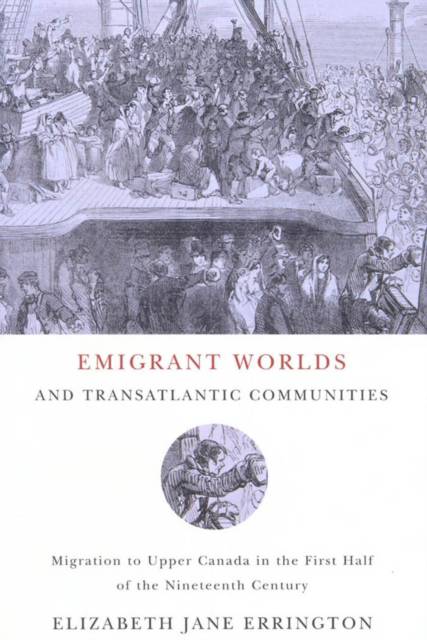
Emigrant Worlds and Transatlantic Communities
Migration to Upper Canada in the First Half of the Nineteenth Century
Elizabeth Errington
€ 51,95
+ 103 punten
Omschrijving
In the fall of 1831, Mrs McIndoe and her children left Scotland to join her husband, William, a labourer on the Rideau Canal. When they arrived they discovered that William had already moved on, forcing Mrs McIndoe to appeal to the public to help reunite her family. As Elizabeth Jane Errington illustrates, the nineteenth-century world of emigration was hazardous.
Emigrant Worlds and Transatlantic Communities gives voice to the Irish, Scottish, English, and Welsh women and men who negotiated the complex and often dangerous world of emigration between 1815 and 1845. Using "information wanted" notices that appeared in colonial newspapers as well as emigrants' own accounts, Errington illustrates that emigration was a family affair. Individuals made their decisions within a matrix of kin and community - their experiences shaped by their identities as husbands and wives, parents and children, siblings and cousins. The Atlantic crossing divided families, but it was also the means of reuniting kin and rebuilding old communities. Emigration created its own unique world - a world whose inhabitants remained well aware of the transatlantic community that provided them with a continuing sense of identity, home, and family.Specificaties
Betrokkenen
- Auteur(s):
- Uitgeverij:
Inhoud
- Aantal bladzijden:
- 256
- Taal:
- Engels
- Reeks:
- Reeksnummer:
- nr. 24
Eigenschappen
- Productcode (EAN):
- 9780773532663
- Verschijningsdatum:
- 16/10/2007
- Uitvoering:
- Paperback
- Formaat:
- Trade paperback (VS)
- Afmetingen:
- 155 mm x 228 mm
- Gewicht:
- 358 g



Alleen bij Standaard Boekhandel
+ 103 punten op je klantenkaart van Standaard Boekhandel
Cadeau

AANGERADEN


Beoordelingen
We publiceren alleen reviews die voldoen aan de voorwaarden voor reviews. Bekijk onze voorwaarden voor reviews.