


- Afhalen na 1 uur in een winkel met voorraad
- Gratis thuislevering in België vanaf € 30
- Ruim aanbod met 7 miljoen producten
- Afhalen na 1 uur in een winkel met voorraad
- Gratis thuislevering in België vanaf € 30
- Ruim aanbod met 7 miljoen producten





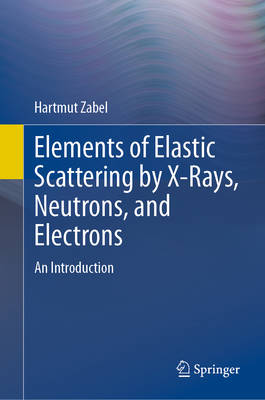
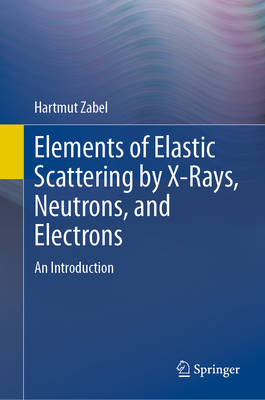
Elements of Elastic Scattering by X-Rays, Neutrons, and Electrons
An Introduction
Hartmut Zabel
Hardcover | Engels
€ 97,45
+ 194 punten
Omschrijving
This textbook provides an elementary yet systematic introduction to x-ray, neutron, and electron scattering for the structural analysis of condensed matter materials. These three methods are treated on the same footing by the same mathematical formalism and in a simplified fashion. Neutron scattering is an entirely quantum mechanical process. However, the way neutron scattering is described here does not require any mastery of quantum mechanics. The emphasis is more on the similarity of the three methods than on the canonical treatment of the respective scattering theories. Furthermore, Math boxes help to overcome technical difficulties in derivations. Each chapter is rounded up with a summary, questions, and a few exercises. The book is suitable for all students and researchers in materials science who want to gain a first overview of the various topics of scattering methods for structural analysis, including modern methods used at synchrotron radiation facilities.
Specificaties
Betrokkenen
- Auteur(s):
- Uitgeverij:
Inhoud
- Aantal bladzijden:
- 451
- Taal:
- Engels
Eigenschappen
- Productcode (EAN):
- 9783032166234
- Verschijningsdatum:
- 4/07/2026
- Uitvoering:
- Hardcover
- Formaat:
- Genaaid
- Afmetingen:
- 155 mm x 235 mm


Alleen bij Standaard Boekhandel
+ 194 punten op je klantenkaart van Standaard Boekhandel
Cadeau

AANGERADEN


Beoordelingen
We publiceren alleen reviews die voldoen aan de voorwaarden voor reviews. Bekijk onze voorwaarden voor reviews.