


- Afhalen na 1 uur in een winkel met voorraad
- Gratis thuislevering in België vanaf € 30
- Ruim aanbod met 7 miljoen producten
- Afhalen na 1 uur in een winkel met voorraad
- Gratis thuislevering in België vanaf € 30
- Ruim aanbod met 7 miljoen producten





€ 77,45
+ 154 punten
Omschrijving
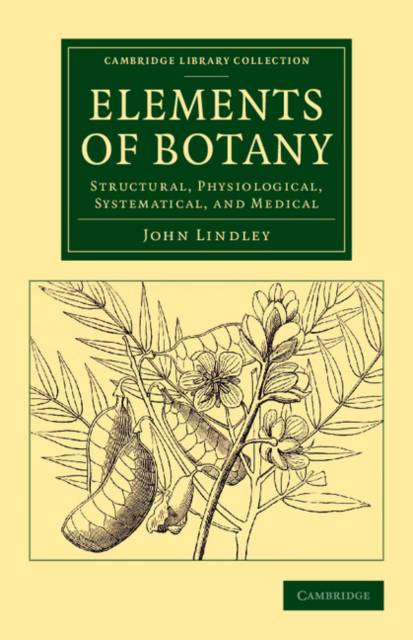
Employed early in his career by Sir Joseph Banks, the botanist John Lindley (1799-1865) is best known for his recommendation that Kew Gardens should become a national botanical institution, and for saving the Royal Horticultural Society from financial disaster. As an author, he is best remembered for his works on taxonomy and classification. A partisan of the 'natural' system rather than the Linnaean, Lindley published this 1841 work, the fourth edition of his Outline of the First Principles of Botany, under a new title to emphasise not only that it was 'much extended, and, it is hoped, improved', but also that it was a textbook for students of 'structural, physiological, systematical, and medical' botany. He defines the different elements of a plant, and provides a checklist for identification of plant families, before discussing the various 'natural' systems of classification, including his own, and the different practical uses of plants.
Specificaties
Betrokkenen
- Auteur(s):
- Uitgeverij:
Inhoud
- Aantal bladzijden:
- 304
- Taal:
- Engels
- Reeks:
Eigenschappen
- Productcode (EAN):
- 9781108076647
- Verschijningsdatum:
- 5/03/2015
- Uitvoering:
- Paperback
- Formaat:
- Trade paperback (VS)
- Afmetingen:
- 140 mm x 216 mm
- Gewicht:
- 385 g


Alleen bij Standaard Boekhandel
+ 154 punten op je klantenkaart van Standaard Boekhandel
Cadeau

AANGERADEN


Beoordelingen
We publiceren alleen reviews die voldoen aan de voorwaarden voor reviews. Bekijk onze voorwaarden voor reviews.