


- Afhalen na 1 uur in een winkel met voorraad
- Gratis thuislevering in België vanaf € 30
- Ruim aanbod met 7 miljoen producten
- Afhalen na 1 uur in een winkel met voorraad
- Gratis thuislevering in België vanaf € 30
- Ruim aanbod met 7 miljoen producten





€ 151,45
+ 302 punten
Omschrijving
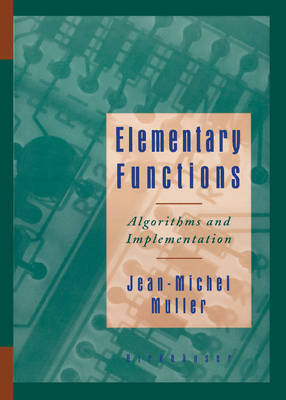
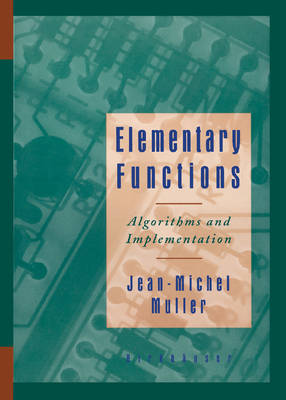
The elementary functions (sine, cosine, exponentials, logarithms . . . ) are the most commonly used mathematical functions. Computing them quickly and accurately is a major goal in computer arithmetic. This book gives the theoretical background necessary to understand and/or build algorithms for computing these functions, presents algorithms (hardware-oriented as well as software-oriented), and discusses issues related to the accurate floating-point implementation of these functions. My purpose was not to give "cooking recipes" that allow to implement some given functions on some given floating-point systems, but to provide the reader with the knowledge that is necessary to build, or adapt algorithms to his or her computing environment. When writing this book, I have had in mind two different audiences: specialists, who will have to design floating-point systems (hardware or soft- ware parts) orto do research on algorithms, and inquiring minds, who just want to know what kind of methods are used to compute the math functions in current computers or pocket calculators. Because of this, the book is in- tended to be helpful as well for postgraduate and advanced undergraduate students in computer science or applied mathematics as for professionals engaged in the design of algorithms, programs or circuits that implement floating-point arithmetic, or simply for engineers or scientists who want to improve their culture in that domain.
Specificaties
Betrokkenen
- Auteur(s):
- Uitgeverij:
Inhoud
- Aantal bladzijden:
- 204
- Taal:
- Engels
Eigenschappen
- Productcode (EAN):
- 9780817639907
- Verschijningsdatum:
- 15/07/1997
- Uitvoering:
- Hardcover
- Formaat:
- Genaaid
- Afmetingen:
- 186 mm x 261 mm
- Gewicht:
- 612 g


Alleen bij Standaard Boekhandel
+ 302 punten op je klantenkaart van Standaard Boekhandel
Wedstrijd


Beoordelingen
We publiceren alleen reviews die voldoen aan de voorwaarden voor reviews. Bekijk onze voorwaarden voor reviews.