


- Afhalen na 1 uur in een winkel met voorraad
- Gratis thuislevering in België vanaf € 30
- Ruim aanbod met 7 miljoen producten
- Afhalen na 1 uur in een winkel met voorraad
- Gratis thuislevering in België vanaf € 30
- Ruim aanbod met 7 miljoen producten





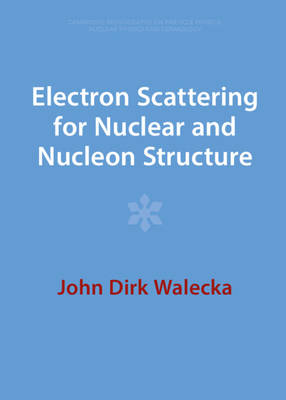
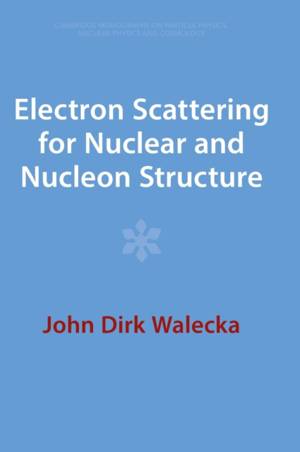
Electron Scattering for Nuclear and Nucleon Structure
John Dirk Walecka
€ 147,45
+ 294 punten
Uitvoering
Eenvoudig bestellen
Veilig betalen


Gratis thuislevering vanaf € 30 (via bpost)
Gratis levering in je Standaard Boekhandel
Omschrijving
The scattering of high-energy electrons from nuclear and nucleon targets provides a microscope for examining the structure of these tiny objects. The best evidence we have on what nuclei and nucleons actually look like comes from electron scattering. This 2001 book examines the motivation for electron scattering and develops the theoretical analysis of the process. It discusses our theoretical understanding of the underlying structure of nuclei and nucleons at appropriate levels of resolution and sophistication, and summarizes experimental electron scattering capabilities. Only a working knowledge of quantum mechanics and special relativity is assumed, making this a suitable textbook for graduate and advanced undergraduate courses. It will also provide a valuable summary and reference for researchers already working in electron scattering and other areas of nuclear and particle physics. This text has been reissued as an Open Access publication on Cambridge Core.
Specificaties
Betrokkenen
- Auteur(s):
- Uitgeverij:
Inhoud
- Aantal bladzijden:
- 378
- Taal:
- Engels
- Reeks:
- Reeksnummer:
- nr. 16
Eigenschappen
- Productcode (EAN):
- 9781009290579
- Verschijningsdatum:
- 9/02/2023
- Uitvoering:
- Hardcover
- Formaat:
- Genaaid
- Afmetingen:
- 178 mm x 254 mm
- Gewicht:
- 870 g


Alleen bij Standaard Boekhandel
+ 294 punten op je klantenkaart van Standaard Boekhandel
CADEAU

AANGERADEN


Beoordelingen
We publiceren alleen reviews die voldoen aan de voorwaarden voor reviews. Bekijk onze voorwaarden voor reviews.