


- Afhalen na 1 uur in een winkel met voorraad
- Gratis thuislevering in België vanaf € 30
- Ruim aanbod met 7 miljoen producten
- Afhalen na 1 uur in een winkel met voorraad
- Gratis thuislevering in België vanaf € 30
- Ruim aanbod met 7 miljoen producten





€ 55,95
+ 111 punten
Eenvoudig bestellen
Veilig betalen


Gratis thuislevering vanaf € 30 (via bpost)
Gratis levering in je Standaard Boekhandel
Omschrijving
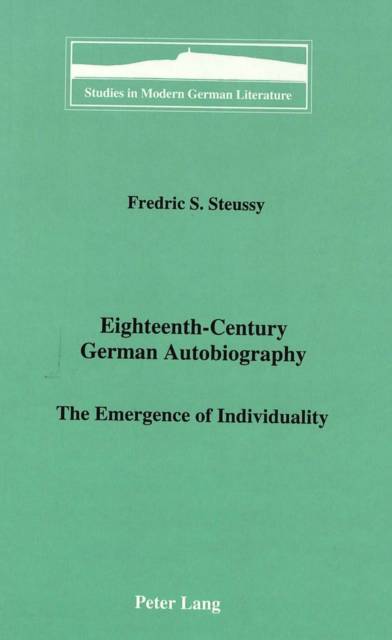
Recent scholarship has established the last decades of the eighteenth century and beginning of the nineteenth century as of decisive importance for the emergence of the modern conception of selfhood or individuality. In German autobiography, the appearance of Goethe's Dichtung und Wahrheit is often regarded as the culmination of this development. Eighteenth-Century German Autobiography focuses on the various tentative and incomplete manifestations of individuality in German autobiography in the three decades before the appearance of Goethe's work. The authors treated are Peter Prosch, Johann Christian Brandes, Christian Friedrich Daniel Schubart, Friedrich Christian Laukhard, Salomon Maimon, Johann Seume, Karl Friedrich Bahrdt, Ulrich Bräker, and Karl Philipp Moritz. The works are divided into three groups of three, based on shared common characteristics and examined in order of increasing depth and complexity of self-presentation.
Specificaties
Betrokkenen
- Auteur(s):
- Uitgeverij:
Inhoud
- Aantal bladzijden:
- 231
- Taal:
- Engels
- Reeks:
- Reeksnummer:
- nr. 69
Eigenschappen
- Productcode (EAN):
- 9780820424958
- Verschijningsdatum:
- 1/11/1996
- Uitvoering:
- Hardcover
- Formaat:
- Genaaid
- Afmetingen:
- 297 mm x 162 mm
- Gewicht:
- 499 g


Alleen bij Standaard Boekhandel
+ 111 punten op je klantenkaart van Standaard Boekhandel
CADEAU

AANGERADEN


Beoordelingen
We publiceren alleen reviews die voldoen aan de voorwaarden voor reviews. Bekijk onze voorwaarden voor reviews.