


- Afhalen na 1 uur in een winkel met voorraad
- Gratis thuislevering in België vanaf € 30
- Ruim aanbod met 7 miljoen producten
- Afhalen na 1 uur in een winkel met voorraad
- Gratis thuislevering in België vanaf € 30
- Ruim aanbod met 7 miljoen producten





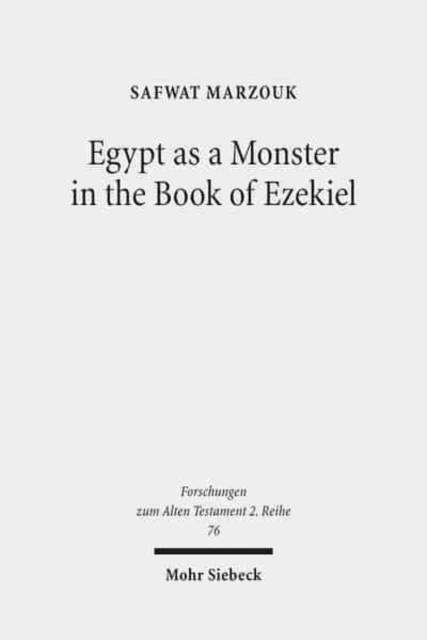
Egypt as a Monster in the Book of Ezekiel
Safwat Marzouk
€ 109,45
+ 218 punten
Omschrijving
Appealing to Monster Theory and the ancient Near Eastern motif of "Chaoskampf," Safwat Marzouk argues that the paradoxical character of the category of the monster is what prompts the portrayal of Egypt as a monster in the book of Ezekiel. While on the surface the monster seems to embody utter difference, underlying its otherness there is a disturbing sameness. Though the monster may be defeated and its body dismembered, it is never completely annihilated. Egypt is portrayed as a monster in the book of Ezekiel because Egypt represents the threat of religious assimilation. Although initially the monstrosity of Egypt is constructed because of the shared elements of identity between Egypt and Israel, the prophet flips this imagery of monster in order to embody Egypt as a monstrous Other. In a combat myth, YHWH defeats the monster and dismembers its body. Despite its near annihilation, Egypt, in Ezekiel's rhetoric, is not entirely obliterated. Rather, it is kept at bay, hovering at the periphery, questioning Israel's identity.
Specificaties
Betrokkenen
- Auteur(s):
- Uitgeverij:
Inhoud
- Aantal bladzijden:
- 289
- Taal:
- Engels
- Reeks:
- Reeksnummer:
- nr. 76
Eigenschappen
- Productcode (EAN):
- 9783161532450
- Verschijningsdatum:
- 1/06/2015
- Uitvoering:
- Paperback
- Formaat:
- Trade paperback (VS)
- Afmetingen:
- 155 mm x 231 mm
- Gewicht:
- 439 g


Alleen bij Standaard Boekhandel
+ 218 punten op je klantenkaart van Standaard Boekhandel
Cadeau

AANGERADEN


Beoordelingen
We publiceren alleen reviews die voldoen aan de voorwaarden voor reviews. Bekijk onze voorwaarden voor reviews.