


- Afhalen na 1 uur in een winkel met voorraad
- Gratis thuislevering in België vanaf € 30
- Ruim aanbod met 7 miljoen producten
- Afhalen na 1 uur in een winkel met voorraad
- Gratis thuislevering in België vanaf € 30
- Ruim aanbod met 7 miljoen producten





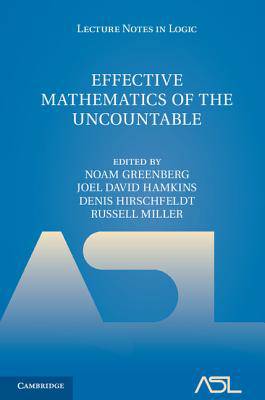
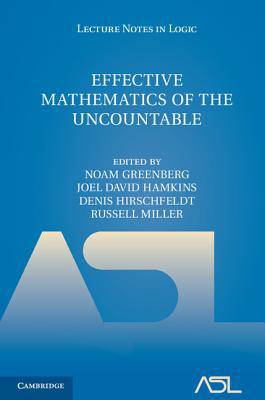
Effective Mathematics of the Uncountable
€ 229,45
+ 458 punten
Omschrijving
Classical computable model theory is most naturally concerned with countable domains. There are, however, several methods - some old, some new - that have extended its basic concepts to uncountable structures. Unlike in the classical case, however, no single dominant approach has emerged, and different methods reveal different aspects of the computable content of uncountable mathematics. This book contains introductions to eight major approaches to computable uncountable mathematics: descriptive set theory; infinite time Turing machines; Blum-Shub-Smale computability; Sigma-definability; computability theory on admissible ordinals; E-recursion theory; local computability; and uncountable reverse mathematics. This book provides an authoritative and multifaceted introduction to this exciting new area of research that is still in its early stages. It is ideal as both an introductory text for graduate and advanced undergraduate students, and a source of interesting new approaches for researchers in computability theory and related areas.
Specificaties
Betrokkenen
- Uitgeverij:
Inhoud
- Aantal bladzijden:
- 204
- Taal:
- Engels
- Reeks:
- Reeksnummer:
- nr. 41
Eigenschappen
- Productcode (EAN):
- 9781107014510
- Verschijningsdatum:
- 31/10/2013
- Uitvoering:
- Hardcover
- Formaat:
- Genaaid
- Afmetingen:
- 152 mm x 231 mm
- Gewicht:
- 476 g

Alleen bij Standaard Boekhandel
+ 458 punten op je klantenkaart van Standaard Boekhandel
CADEAU

AANGERADEN


Beoordelingen
We publiceren alleen reviews die voldoen aan de voorwaarden voor reviews. Bekijk onze voorwaarden voor reviews.