


- Afhalen na 1 uur in een winkel met voorraad
- Gratis thuislevering in België vanaf € 30
- Ruim aanbod met 7 miljoen producten
- Afhalen na 1 uur in een winkel met voorraad
- Gratis thuislevering in België vanaf € 30
- Ruim aanbod met 7 miljoen producten





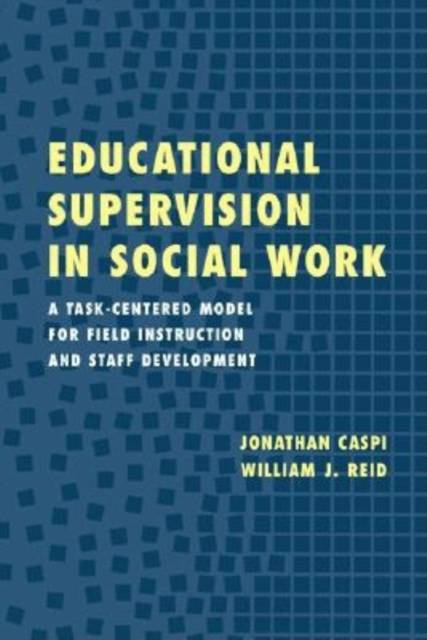
Educational Supervision in Social Work
A Task-Centered Model for Field Instruction and Staff Development
Jonathan Caspi, William J Reid
Paperback | Engels
€ 71,45
+ 142 punten
Uitvoering
Omschrijving
This book provides a comprehensive examination of instructional supervision and introduces the Task-Centered Model for Educational Supervision (TCS). It begins by reviewing the history of educational supervision in social work and principles of effective teaching practices in the field. While theories about the principles and purposes of educational supervision abound, it has proven difficult to translate these ideas into a coherent model of supervisory practice. Educational Supervision in Social Work answers that need, presenting in detail TCS, an ordered series of discrete activities that supervisors and supervisees follow during and between supervision meetings. Designed to promote the continuous attainment of learning and practice objectives, TCS accommodates new models of field instruction, addresses common accountability concerns in social work supervision, and teaches practitioners how to be self-initiating and evaluative. Focusing on the practical implementation of TCS, Caspi and Reed have included detailed case vignettes throughout the book that provide concrete examples of putting theory into practice. Both supervisors of interns and staff as well as supervisees will find TCS a helpful tool in the supervisory process.
Specificaties
Betrokkenen
- Auteur(s):
- Uitgeverij:
Inhoud
- Aantal bladzijden:
- 274
- Taal:
- Engels
Eigenschappen
- Productcode (EAN):
- 9780231108539
- Verschijningsdatum:
- 21/11/2002
- Uitvoering:
- Paperback
- Formaat:
- Trade paperback (VS)
- Afmetingen:
- 153 mm x 233 mm
- Gewicht:
- 476 g


Alleen bij Standaard Boekhandel
+ 142 punten op je klantenkaart van Standaard Boekhandel
Cadeau

AANGERADEN


Beoordelingen
We publiceren alleen reviews die voldoen aan de voorwaarden voor reviews. Bekijk onze voorwaarden voor reviews.