



Je cadeautjes zeker op tijd in huis hebben voor de feestdagen? Kom langs in onze winkels en vind het perfecte geschenk!
- Afhalen na 1 uur in een winkel met voorraad
- Gratis thuislevering in België vanaf € 30
- Ruim aanbod met 7 miljoen producten
Je cadeautjes zeker op tijd in huis hebben voor de feestdagen? Kom langs in onze winkels en vind het perfecte geschenk!
- Afhalen na 1 uur in een winkel met voorraad
- Gratis thuislevering in België vanaf € 30
- Ruim aanbod met 7 miljoen producten





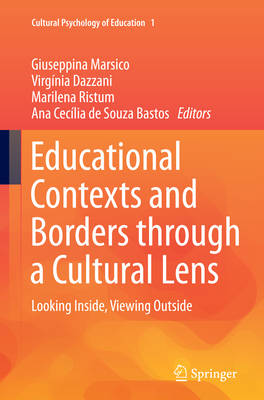
Educational Contexts and Borders through a Cultural Lens
Looking Inside, Viewing Outside
€ 106,95
+ 213 punten
Omschrijving
This book provides a "context" of discussion for researchers and educational experts in order to rethink the relationship between actors, practices and borders within the educational contexts. The research in educational psychology has often challenged the concept of "educational context". According to the different theoretical frameworks, the construct of contexts, their borders and the dimensions to be taken into account have all been defined in different ways. The book offers a reflection that goes from theory to practice and backward from practice to theory. The main research questions the book addresses are how actors, i.e. teachers, parents and students, educators and professionals, with their own identity and social representations, build their educational practices or their shared cultural spaces where knowledge is generated, defining the borders of the educational contexts. The book proposes that a border is a type of membrane within and outside the educational setting bringing together different actors, groups and cultures. The book presents the perspectives of scholars and educational experts from various parts of the world, including Brazil, Argentina, Italy, Japan, and the United Kingdom. They shed light on what happens at the border in different cultural contexts and what the relationship is between the educational setting and the other life contexts or micro-cultures.
Specificaties
Betrokkenen
- Uitgeverij:
Inhoud
- Aantal bladzijden:
- 366
- Taal:
- Engels
- Reeks:
- Reeksnummer:
- nr. 1
Eigenschappen
- Productcode (EAN):
- 9783319373751
- Verschijningsdatum:
- 22/10/2016
- Uitvoering:
- Paperback
- Afmetingen:
- 155 mm x 17 mm
- Gewicht:
- 690 g

Alleen bij Standaard Boekhandel
+ 213 punten op je klantenkaart van Standaard Boekhandel
CADEAU


Beoordelingen
We publiceren alleen reviews die voldoen aan de voorwaarden voor reviews. Bekijk onze voorwaarden voor reviews.