


- Afhalen na 1 uur in een winkel met voorraad
- Gratis thuislevering in België vanaf € 30
- Ruim aanbod met 7 miljoen producten
- Afhalen na 1 uur in een winkel met voorraad
- Gratis thuislevering in België vanaf € 30
- Ruim aanbod met 7 miljoen producten





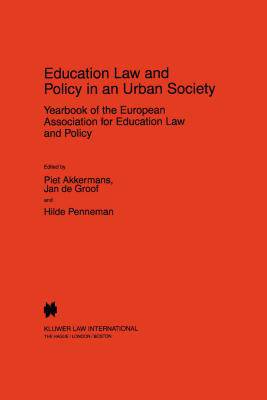
Education Law and Policy in an Urban Society
Yearbook of the European Assoc. for Education Law & Policy - Volume II (1997)
Piet Akkermans, Penneman
€ 167,92
+ 335 punten
Omschrijving
Just how fascinating the discussion between the disciplines of education law and education policy can be was apparent at the 'Annual Congress' of the European Education Law and Policy Association (ELA) in Rotterdam in December 1997. Although, on this occasion, the option was for an education policy subject, a multi-disciplinary approach is always to be preferred. Policy-makers interrogate lawyers; lawyers question scientists from other fields of study and lines of practice. It was, at the same time, a further illustration of how inspiring and productive--in the context of the European Union at any rate--comparative analyses can be for national and international education and social policy. The theme of the 1997 Congress, and consequently of this Yearbook, was urban education policy and its legal form as the touchstone of the modern interpretation of individual and social rights. This collection of thought-provoking essays and country reports thus centres on the question: what challenges for education do urban associations represent?
Specificaties
Betrokkenen
- Auteur(s):
- Uitgeverij:
Inhoud
- Aantal bladzijden:
- 329
- Taal:
- Engels
- Reeks:
- Reeksnummer:
- nr. 2
Eigenschappen
- Productcode (EAN):
- 9789041111463
- Verschijningsdatum:
- 27/05/1999
- Uitvoering:
- Hardcover
- Formaat:
- Genaaid
- Afmetingen:
- 156 mm x 234 mm
- Gewicht:
- 662 g


Alleen bij Standaard Boekhandel
+ 335 punten op je klantenkaart van Standaard Boekhandel
Cadeau

AANGERADEN


Beoordelingen
We publiceren alleen reviews die voldoen aan de voorwaarden voor reviews. Bekijk onze voorwaarden voor reviews.