


- Afhalen na 1 uur in een winkel met voorraad
- Gratis thuislevering in België vanaf € 30
- Ruim aanbod met 7 miljoen producten
- Afhalen na 1 uur in een winkel met voorraad
- Gratis thuislevering in België vanaf € 30
- Ruim aanbod met 7 miljoen producten





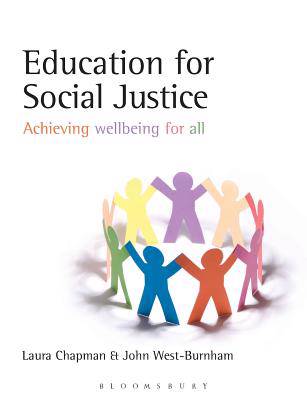
Education for Social Justice
Achieving Wellbeing for All
Laura Chapman, John West-Burnham
Paperback | Engels
€ 98,45
+ 196 punten
Omschrijving
The disparity between excellence and equity is a key issue for education policy and practice. This book is an argument for equity and inclusion in education, based on a model of social justice which is grounded in relationships and learning rather than policies and structures. Countries that combine excellence with equity, where young people experience high levels of wellbeing, tend to be societies with a commitment to social justice, equity and inclusion. There is an increasing recognition that long term educational and social reforms have to focus on issues around social justice if they are to be more than palliative responses.
Education for Social Justice looks at the role of relationships on many levels: personal meaning, group or team interaction, the school structure and culture, and cross agency and community involvement and development. The aim of this book is to find a paradigm that can be used to achieve greater social fairness, by finding individual/local solutions still in line with national policies and strategies.Specificaties
Betrokkenen
- Auteur(s):
- Uitgeverij:
Inhoud
- Aantal bladzijden:
- 176
- Taal:
- Engels
Eigenschappen
- Productcode (EAN):
- 9781855394698
- Verschijningsdatum:
- 16/02/2010
- Uitvoering:
- Paperback
- Formaat:
- Trade paperback (VS)
- Afmetingen:
- 188 mm x 244 mm
- Gewicht:
- 358 g


Alleen bij Standaard Boekhandel
+ 196 punten op je klantenkaart van Standaard Boekhandel
AANGERADEN


Beoordelingen
We publiceren alleen reviews die voldoen aan de voorwaarden voor reviews. Bekijk onze voorwaarden voor reviews.