



Je cadeautjes zeker op tijd in huis hebben voor de feestdagen? Kom langs in onze winkels en vind het perfecte geschenk!
- Afhalen na 1 uur in een winkel met voorraad
- Gratis thuislevering in België vanaf € 30
- Ruim aanbod met 7 miljoen producten
Je cadeautjes zeker op tijd in huis hebben voor de feestdagen? Kom langs in onze winkels en vind het perfecte geschenk!
- Afhalen na 1 uur in een winkel met voorraad
- Gratis thuislevering in België vanaf € 30
- Ruim aanbod met 7 miljoen producten





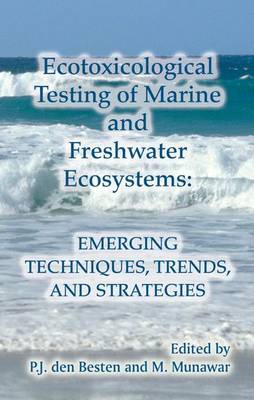
Ecotoxicological Testing of Marine and Freshwater Ecosystems
Emerging Techniques, Trends and Strategies
€ 290,95
+ 581 punten
Omschrijving
Focusing on state-of-the-art biological testing and methods used for aquatic ecosystem health assessment, Ecotoxicological Testing of Marine and Freshwater Ecosystems evaluates the latest bioassay techniques and different types of water and sediment quality assessments. The book also explores multi-tiered approaches to making recommendations for the preservation, enhancement, and restoration of ecosystem functions as well as risk perception and communication strategies for investigators, policy makers, government agencies, and the public. The book examines the use of selective biosensors, bioassays, bioaccumulation modeling, biomarkers, gene expression analysis, and other techniques that enable scientists to measure cellular, sub-cellular, and molecular effects of low-level contaminants on various organisms and evaluate changes caused by over-exploitation, habitat modification, catchment run-off, polluting emissions, and even global warming. The chapters describe various ways to assess species diversity, organism population trends, and exposure routes to reveal tangible consequences of sediment or water toxicity. A chapter is dedicated to the role of remote sensing technologies in monitoring, prediction, and management of changes within coastal ecosystems, along with improvements in information technology and data processing that allow for the assessment of spatial variability. The last chapter summarizes the current status of techniques and strategies. Several appendices highlight the strengths and limitations of various techniques and provide references to additional literature. Contributed by leading field experts, this book is useful for post-graduate students, researchers, and regulatory professionals involved in environmental toxicology, ecosystem health, ecology, pollution monitoring, and freshwater and marine science. Ecotoxicological Testing of Marine and Freshwater Ecosystems: Emerging Techniques, Trends and Strategies presents new possibilities for prognostic tools that can be used for early detection systems and integrative approaches that foster informed decision-making consisting of evidence-based risk assessments for remediation, treatment, and maintenance in environmental and resource management
Specificaties
Betrokkenen
- Uitgeverij:
Inhoud
- Aantal bladzijden:
- 296
- Taal:
- Engels
- Reeks:
Eigenschappen
- Productcode (EAN):
- 9780849335266
- Verschijningsdatum:
- 29/03/2005
- Uitvoering:
- Hardcover
- Formaat:
- Genaaid
- Afmetingen:
- 169 mm x 244 mm
- Gewicht:
- 698 g

Alleen bij Standaard Boekhandel
+ 581 punten op je klantenkaart van Standaard Boekhandel
CADEAU


Beoordelingen
We publiceren alleen reviews die voldoen aan de voorwaarden voor reviews. Bekijk onze voorwaarden voor reviews.