


- Afhalen na 1 uur in een winkel met voorraad
- Gratis thuislevering in België vanaf € 30
- Ruim aanbod met 7 miljoen producten
- Afhalen na 1 uur in een winkel met voorraad
- Gratis thuislevering in België vanaf € 30
- Ruim aanbod met 7 miljoen producten





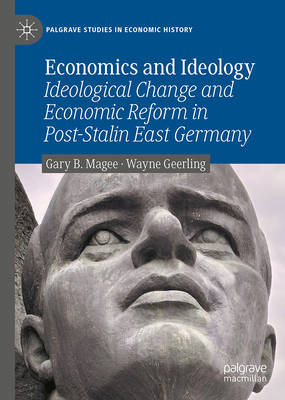
Economics and Ideology
Ideological Change and Economic Reform in Post-Stalin East Germany
Gary B Magee, Wayne Geerling
€ 140,95
+ 281 punten
Omschrijving
This book explains how ideology can be better integrated into economic history analysis, arguing that if economists and economic historians are to fully understand economic behaviour a much deeper appreciation of ideological processes is required. The book has two parts. The first part presents a comprehensive theory of ideology and ideological change that can be easily incorporated into economic analysis; the second provides an empirical case study of ideological change from East Germany of the 1960s. The book demonstrates how current restrictive views of ideology found within mainstream economics can be enhanced by adopting a more expansive, multidisciplinary understanding of ideology and its role in the processes of economic change. Merging a view of ideology as a fluid and politically practical concept with the framework of change offered by institutional economics, the authors use this theory to provide an in-depth analysis of how the ideological case for the New Economic System in East Germany and for de-Stalinisation more generally in the 1960s was built. Rich in archival material, the book both deepens our understanding of economic change in the communist world in the post-Stalin era and demonstrates the multifaceted role of ideology in economic decision making. With a cutting-edge approach, this book will be a valuable resource for students of economics, economic history, political economy, as well as of communist and German history.
Specificaties
Betrokkenen
- Auteur(s):
- Uitgeverij:
Inhoud
- Taal:
- Engels
- Reeks:
Eigenschappen
- Productcode (EAN):
- 9783032293312
- Verschijningsdatum:
- 12/08/2026
- Uitvoering:
- Hardcover
- Formaat:
- Genaaid
- Afmetingen:
- 148 mm x 210 mm


Alleen bij Standaard Boekhandel
+ 281 punten op je klantenkaart van Standaard Boekhandel
Cadeau

AANGERADEN


Beoordelingen
We publiceren alleen reviews die voldoen aan de voorwaarden voor reviews. Bekijk onze voorwaarden voor reviews.