



Je cadeautjes zeker op tijd in huis hebben voor de feestdagen? Kom langs in onze winkels en vind het perfecte geschenk!
- Afhalen na 1 uur in een winkel met voorraad
- Gratis thuislevering in België vanaf € 30
- Ruim aanbod met 7 miljoen producten
Je cadeautjes zeker op tijd in huis hebben voor de feestdagen? Kom langs in onze winkels en vind het perfecte geschenk!
- Afhalen na 1 uur in een winkel met voorraad
- Gratis thuislevering in België vanaf € 30
- Ruim aanbod met 7 miljoen producten





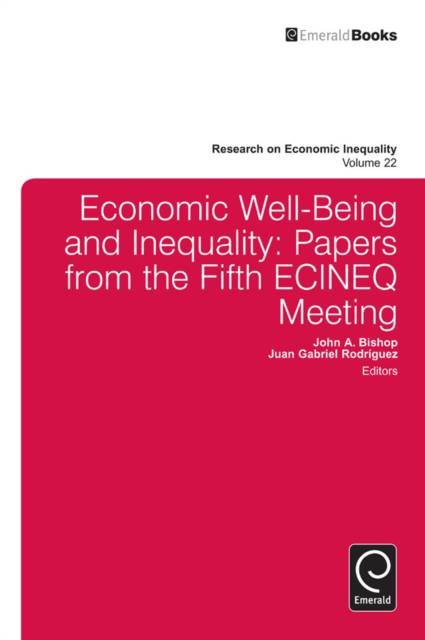
Economic Well-Being and Inequality
Papers from the Fifth Ecineq Meeting
€ 402,95
+ 805 punten
Omschrijving
Research on Economic Inequality, Volume 22 begins with papers of widespread interest on the impact of the Great Recession. The first paper addresses the impact of "asset meltdown" on the wealth of the US middle class, with disparate racial and ethnic impacts. The second studies poverty and inequality in the US in the aftermath of the Great Recession. The next topic is on the evolution of poverty and inequality in the world. One paper proposes a new methodology to measure global poverty and inequality, while the second analyzes the importance of considering not only the desperately poor but also those just above the subsistence level. Great interest for inequality researchers lies on the use of wealth data. Two approaches to this issue are presented. Firstly, several papers study wealth inequality directly. Secondly, a paper uses annuitized wealth data to augment the income measure of economic well-being. An emerging field in the study of economic well-being is the use of self-reported status and perceptions data. Three papers employ this type of data, investigating happiness inequality, perception of income inequality, and the existence of a "Great Gatsby Curve" for job mobility.
Specificaties
Betrokkenen
- Uitgeverij:
Inhoud
- Aantal bladzijden:
- 520
- Taal:
- Engels
- Reeks:
- Reeksnummer:
- nr. 22
Eigenschappen
- Productcode (EAN):
- 9781783505678
- Verschijningsdatum:
- 29/09/2014
- Uitvoering:
- Hardcover
- Formaat:
- Ongenaaid / garenloos gebonden
- Afmetingen:
- 155 mm x 231 mm
- Gewicht:
- 907 g

Alleen bij Standaard Boekhandel
+ 805 punten op je klantenkaart van Standaard Boekhandel
CADEAU


Beoordelingen
We publiceren alleen reviews die voldoen aan de voorwaarden voor reviews. Bekijk onze voorwaarden voor reviews.