



Je cadeautjes zeker op tijd in huis hebben voor de feestdagen? Kom langs in onze winkels en vind het perfecte geschenk!
- Afhalen na 1 uur in een winkel met voorraad
- Gratis thuislevering in België vanaf € 30
- Ruim aanbod met 7 miljoen producten
Je cadeautjes zeker op tijd in huis hebben voor de feestdagen? Kom langs in onze winkels en vind het perfecte geschenk!
- Afhalen na 1 uur in een winkel met voorraad
- Gratis thuislevering in België vanaf € 30
- Ruim aanbod met 7 miljoen producten





€ 167,95
+ 335 punten
Uitvoering
Omschrijving
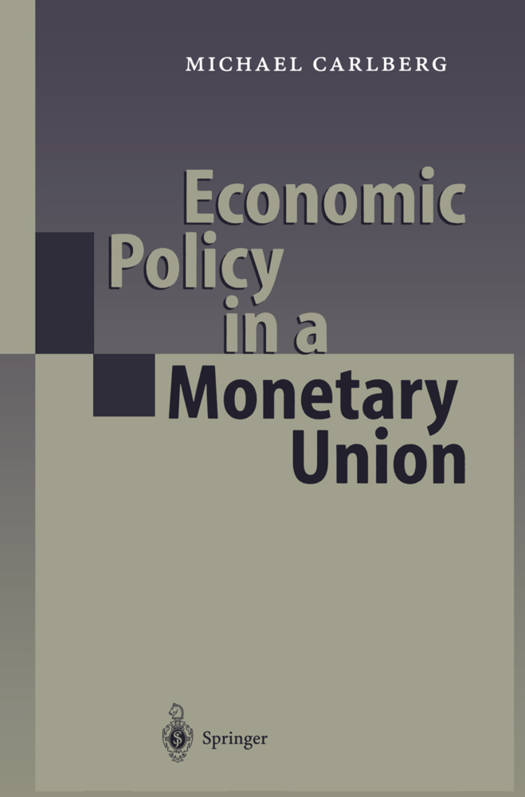
This book explores the scope and limits of macroeconomic policy in a monetary union. The focus is on pure policies, policy mixes, and policy coordination. The leading protagonists are the union central bank, national governments, and national trade unions. Special emphasis is put on wage shocks and wage restraint. This book develops a series of basic, intennediate, and advanced models. A striking feature is the numerical estimation of policy multipliers. A lot of diagrams serve to illustrate the subject in hand. The monetary union is an open economy with high capital mobility. The exchange rate between the monetary union and the rest of the world is floating. The world interest rate can be exogenous or endogenous. The union countries may differ in money demand, consumption, imports, openness, or size. Previous versions of some parts were presented at the Annual Conference of the Gennan Economic Association and . at the Workshop on International Economics. I have benefited from comments by Christopher Bliss, Volker Clausen, Johannes Hackmann, Bernd Hayo, Jay H. Levin, Reinar Ludeke, Dirk Meyer, Jochen Michaelis, Franco Reither, Gerhard Rubel, WolfScMfer, Michael Schmid, Reinhard Selten, Hans-Werner Sinn, Sylvia Staudinger, Thomas Straubhaar, Bas van Aarle, and Artur Woll. In addition, Michael Brauninger and Michael Cyrus carefully discussed with me all parts of the manuscript. Last but not least, Doris Ehrich did the secretarial work as excellently as ever. I wish to thank all of them. Executive Summary 1) The monetary union as a whole. First consider fiscal policy.
Specificaties
Betrokkenen
- Auteur(s):
- Uitgeverij:
Inhoud
- Aantal bladzijden:
- 292
- Taal:
- Engels
Eigenschappen
- Productcode (EAN):
- 9783642631818
- Verschijningsdatum:
- 4/10/2012
- Uitvoering:
- Paperback
- Formaat:
- Trade paperback (VS)
- Afmetingen:
- 156 mm x 234 mm
- Gewicht:
- 439 g


Alleen bij Standaard Boekhandel
+ 335 punten op je klantenkaart van Standaard Boekhandel
CADEAU


Beoordelingen
We publiceren alleen reviews die voldoen aan de voorwaarden voor reviews. Bekijk onze voorwaarden voor reviews.