


- Afhalen na 1 uur in een winkel met voorraad
- Gratis thuislevering in België vanaf € 30
- Ruim aanbod met 7 miljoen producten
- Afhalen na 1 uur in een winkel met voorraad
- Gratis thuislevering in België vanaf € 30
- Ruim aanbod met 7 miljoen producten





Omschrijving
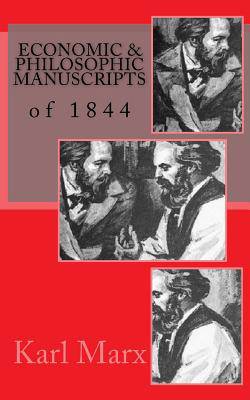
Economic and Philosophic Manuscripts of 1844 (also referred to as The Paris Manuscripts)[1] are a series of notes written between April and August 1844 by Karl Marx. Not published by Marx during his lifetime, they were first released in 1927 by researchers in the Soviet Union. In the first manuscript in which there are extensive quotes on economics from Adam Smith, Marx exposes his theory of alienation, which he adapted (not without changes) from Feuerbach's The Essence of Christianity (1841). He explains how, under capitalism, more and more people rely on "labour" to live. That is, before people could rely in part on Nature itself for its "natural needs"; in modern society, if one wants to eat, one must work: it is only through money that one may survive. Thus, if the alienation of the worker consists in being a "slave toward its object", the worker is doubly alienated: "first, he receives an object of labour, that is he finds work [as one says: 'I finally found work!'], and second, he receives means of subsistence. He thereby owes it [to labour] the possibility to exist first as a worker, second as a physical subject. The last straw of this servitude [or serfdom] is that it is only his quality as a worker that permits him to continue to conserve himself as a physical subject, and it is only as a physical subject that he can be a worker". In other words, the worker relies on labour to gain money to be able to live; but he doesn't simply live, he actually only survives, as a worker. Labour is only used to create more wealth, instead of achieving the fulfillment of human nature.
Specificaties
Betrokkenen
- Auteur(s):
- Vertaler(s):
- Uitgeverij:
Inhoud
- Aantal bladzijden:
- 292
- Taal:
- Engels
Eigenschappen
- Productcode (EAN):
- 9781508712039
- Verschijningsdatum:
- 5/03/2015
- Uitvoering:
- Paperback
- Formaat:
- Trade paperback (VS)
- Afmetingen:
- 127 mm x 203 mm
- Gewicht:
- 290 g


Alleen bij Standaard Boekhandel
+ 44 punten op je klantenkaart van Standaard Boekhandel

Beoordelingen
We publiceren alleen reviews die voldoen aan de voorwaarden voor reviews. Bekijk onze voorwaarden voor reviews.